
Custom Machine Learning Solves the Impossible for Dune 2
Can you make their eyes blue? All of them. In all 1000 shots.
Oh yeah, and this is for Dune 2, so we need it done yesterday.
Such was the challenge placed before Academy Award-winning VFX Supervisor, Paul Lambert. Paul is no stranger to creative challenges and has the track record to show for it. Having won Academy Awards for Best Visual Effects for such blockbuster films as Blade Runner 2049, First Man and Dune 1, his Herculean efforts on this latest challenge for Dune 2 won him his 4th statue!
Puget Systems is very proud to have played a role in his latest achievements in Dune 2 – not only providing the hardware, but working side-by-side with Paul to dissect the challenge, brainstorm a workflow, troubleshoot the challenges along the way and ultimately deliver a workstation that would perform precisely as he needed it to. And as Paul will attest, precision is everything when it comes to high stakes, complex visual effects in Hollywood.
We spoke with Paul Lambert about his latest achievement with Dune 2, and the path it required to get there.
“I had already begun prepping for Dune 2 with the understanding that one of the larger, more tedious and time consuming tasks was focused on a group of people central to the story in Dune – the Fremen.”
For those who might not be familiar with the Dune series, the Fremen are a group of people in the fictional Dune universe who inhabit the desert planet Arrakis – also known as Dune. And their distinguishing characteristic: their eyes are blue. Not just their iris, but their pupils and the whites of their eyes are all a slightly different shade of blue.
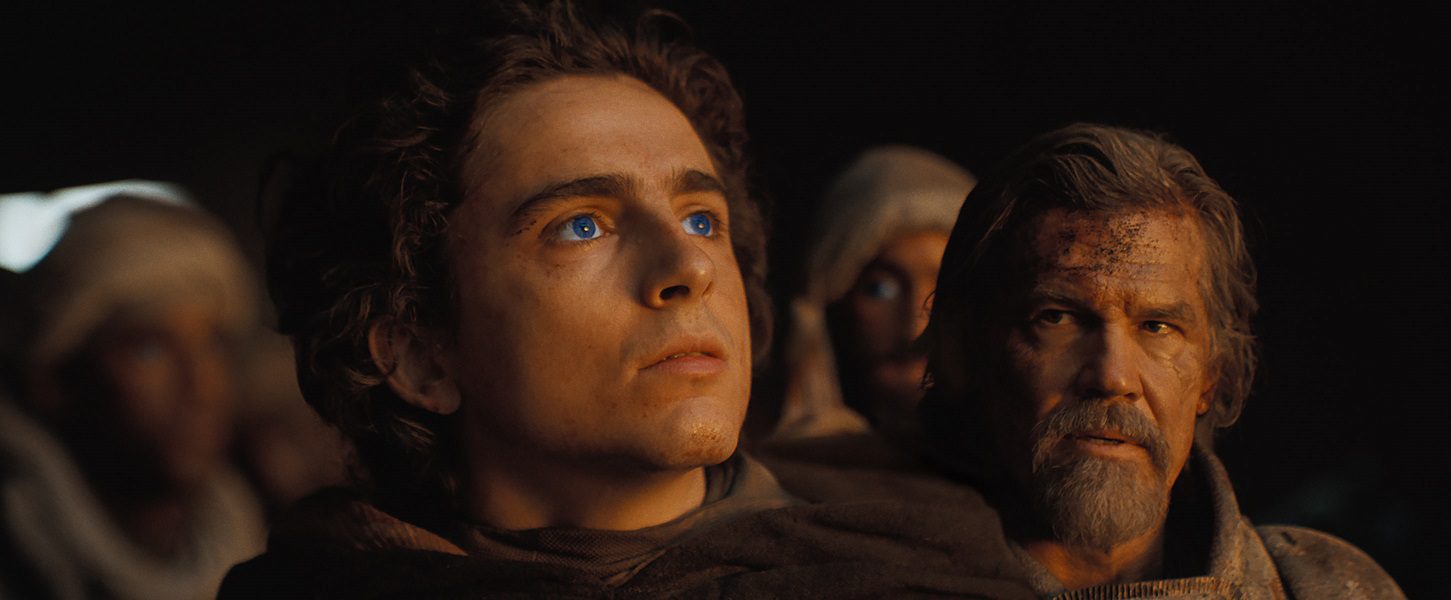
Paul continued, “The amount of work required to create the effect – which started in Dune 1 – was astronomical. In the first film, to accomplish that effect, I had 260 shots manually rotoscoped in Nuke. And to be clear, I’m not just talking about the outline of the eyes – I literally had to have hand-roto of the outline of the eye, the pupils, iris and around the whites of each eye! From these 260 shots, I created Open CV code to handle face detection, and tested it on each face. In the end, I ended up with 30,000 pairs of eyes for the Fremen.”
“There was simply no way to do all of this by hand. So I started to tinker. I have some experience building workstations, so I knew some basics about how to build a system for visual effects work, but not too much beyond that. It’s also important to know that during this time, Machine Learning was also exploding, and the use cases for the kind of work I was facing were very compelling. So I had to take a closer look to see if and how it could play a role in streamlining this workflow. After all, 30,000 pairs of eyes represents a data set on which machine learning can be trained – in particular data sourced only from the first movie! I had a rudimentary system to help me start testing out machine learning to see if it would work for this challenge.”
Paul LambertThere was simply no way to do all of this by hand. So I started to tinker… Machine Learning was also exploding… So I had to take a closer look to see if and how it could play a role in streamlining this workflow.
“Remember, Dune 1 had 260 shots – but Dune 2 had over 1,000 with many many more Fremen whose eyes required roto. It was a much bigger exercise to pull this off. I asked myself, is there a way to leverage what we created for Dune 1 and simply transfer it to Dune 2?”
“It was around that time also that Nuke had just introduced ‘CopyCat’ and it was getting much better, but it was optimized to run on multiple GPUs and multiple CPUs. As I was testing it all out, it was becoming an obsession! It just worked! But I needed to be able to fit all of the sequences, all of that work into the system. This is where I needed help, I needed ‘more system.’ So I called Puget Systems.”
Puget Systems Steps In: The Specs!
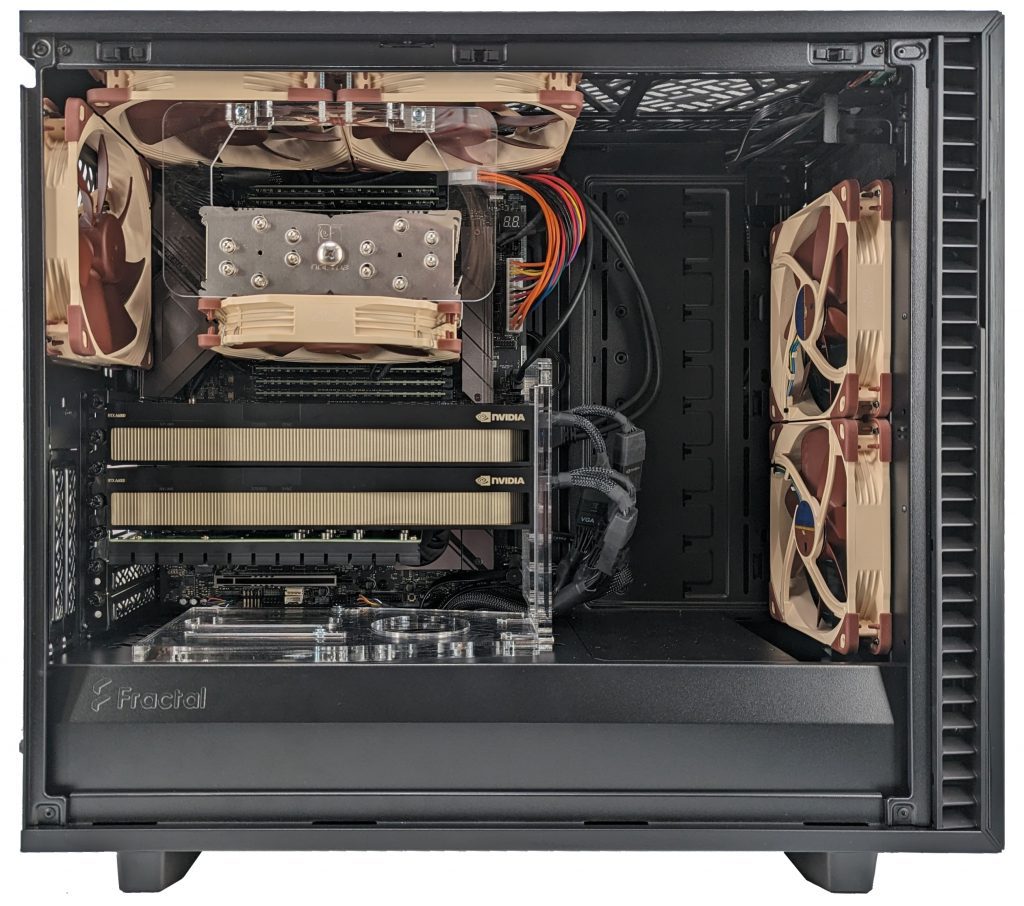
The Puget Systems team has invested significant time and resources in developing a deep understanding of professional workflows in high-end VFX productions. And Paul’s case was in perfect alignment with the consulting team’s expertise. Since Paul was working in Nuke, and more specifically, CopyCat, he not only needed a system with plenty of GPU power, but he also needed significant RAM to be able to process the tens of thousands of Fremen eyes he had created. Here is the system the team came up with, specifically tailored to Paul:
- Motherboard: ASRock WRX80 Creator Rev 2.0
- CPU: AMD Ryzen™ Threadripper™ PRO 5975WX 32 Core
- RAM: 256GB Kingston DDR4-3200 RDIMM (8 x 32GB)
- GPUs: 2x NVIDIA RTX™ 6000 Ada 48GB (upgraded from A6000s)
- Drives: Samsung 980 Pro 1TB & 3x 2TB NVMe SSDs
- Chassis: Fractal Design Define 7
- Power Supply: Super Flower LEADEX Platinum 1200W
- CPU Cooler: Noctua NH-U14S TR4-SP3
- PCIe Adapter: HighPoint SSD7505 Gen4 M.2 Card
Paul continued, “Remember, I was working with a data set of over 30,000 eyes, a massive data set by any standard, to train the software. And it was working really well. But the eye replacement process wasn’t as straightforward as you might think; we had all of these pairs of eyes that needed to be stacked onto each of the 1,000 frames, but each Fremen had different sized eyes, slightly different shapes and it didn’t always work on newer characters. So all the while I’m running the training on the Puget Systems workstation, and for the sets of eyes that didn’t quite work, I had them roto’d by hand by WylieCo VFX, and feed them back into the Puget Systems workstation for training. That takes quite a bit of power but again, it just worked flawlessly.”
“And the other nice thing about the way the team at Puget designed the system was, I had 256 GB of RAM – I had so much memory that I could batch shots. This was a massive performance boost.”
Puget Systems Consulting: Above and Beyond the Sale
“What I loved about my experience with Puget Systems was that it went beyond just building out the right system. When I first reached out to them, I had so many questions about Machine Learning and how to ‘train’ a system. We worked together to produce beta versions of code designed specifically for this task. We had several back and forth conversations that brought us to the release of the software – that is NOT a service you get from just any hardware manufacturer.”
“I have quite a unique partnership with the team at Puget Systems that only gets stronger. We’ll continue to work together to further refine this custom Machine Learning workflow and the hardware required to optimize it. It’s an amazing example of how we were able to leverage technology to take advantage of, repurpose, and vastly improve the thousands of hours of work and creativity that we had invested in creating assets for high-end VFX. It’s about having the right tools for the job, but also having the right partner!”
Paul LambertI have quite a unique partnership with the team at Puget Systems that only gets stronger… It’s about having the right tools for the job, but also having the right partner!
To learn more about Paul Lambert and to see examples of his amazing VFX work in such blockbuster films as Dune 1, Dune 2, Bladerunner 2049, and First Man, please visit his IMDb page.
For more information on Puget Systems and our workstations for high-end VFX, machine learning, and Nuke workflows, please visit our Recommended Systems page.
Talk to an Expert
We specialize in building computer systems tailored for each of our customers – whether workstations, servers, storage solutions, or a combination of them all! We have found that the most effective way to ensure we meet your specific requirements is through direct communication. Our team of expert, non-commissioned consultants is adept at configuring systems that align precisely with your needs. They can refine a quote you’ve already saved or help you navigate our offerings by understanding your use case and workflow – all with no cost or obligation! Start a conversation with us today: