Microsoft Production Studios & SMPTE 2110
Puget Systems removed the friction for MPS to adopt SMPTE 2110, providing stable systems with a willingness to explore experimental configurations.

Microsoft is known for a myriad of technology innovations and advancements in personal and corporate enterprise computing. Unknown to most, they are also driving advancements in another, seemingly unexpected area: virtual production.
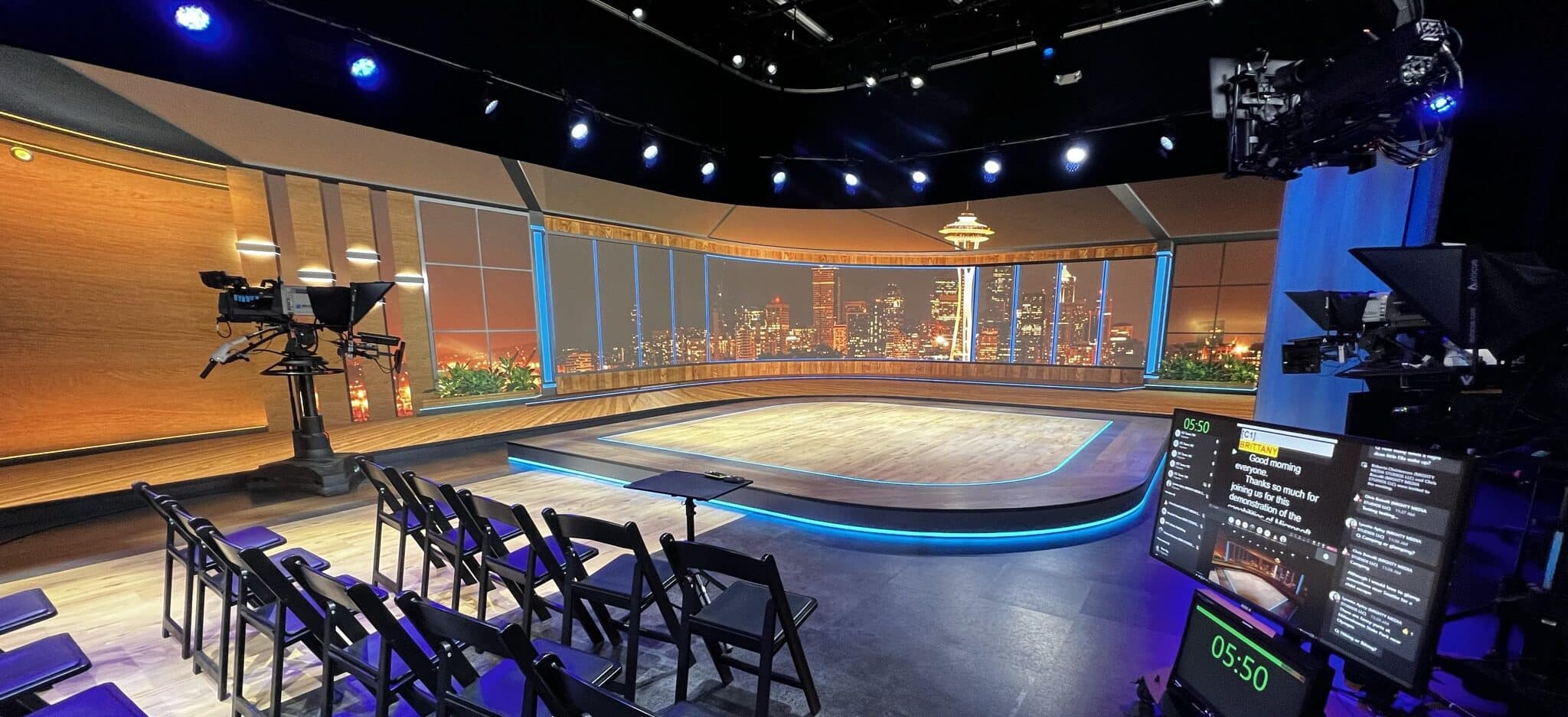
Microsoft Production Studios (MPS) is a full stack, Hollywood-caliber production studio located on their Redmond, WA campus. MPS utilizes advanced virtual production technologies, featuring a 11520 x 2160 pixel LED wall (Stage C) and Unreal Engine-powered XR integration to create real-time, immersive environments for broadcasting, training, and corporate events. This type of setup, increasingly used in high-end productions for television and feature film development, allows for instantaneous backdrop changes, reducing the need for on-location shooting and enhancing efficiency. They are on the cutting edge!
Some of the key attributes and technologies embraced by the MPS team include:
- Stage C LED Wall: Features over 300 panels of 1.5mm LED panels, creating a high-resolution, immersive, and interactive background for on-screen talent.
- Real-Time Rendering & Tracking: Utilizes Unreal Engine for rendering 3D environments, with AR/XR tracking providing realistic perspectives.
- Cloud-Based Workflows: In partnership with WPP, Microsoft uses Azure cloud technology to enable remote collaboration.
- Infrastructure & Scalability: IP infrastructure allows the studio to support massive, simultaneous events, with increased production capacity for high-profile, global, and hybrid meetings.
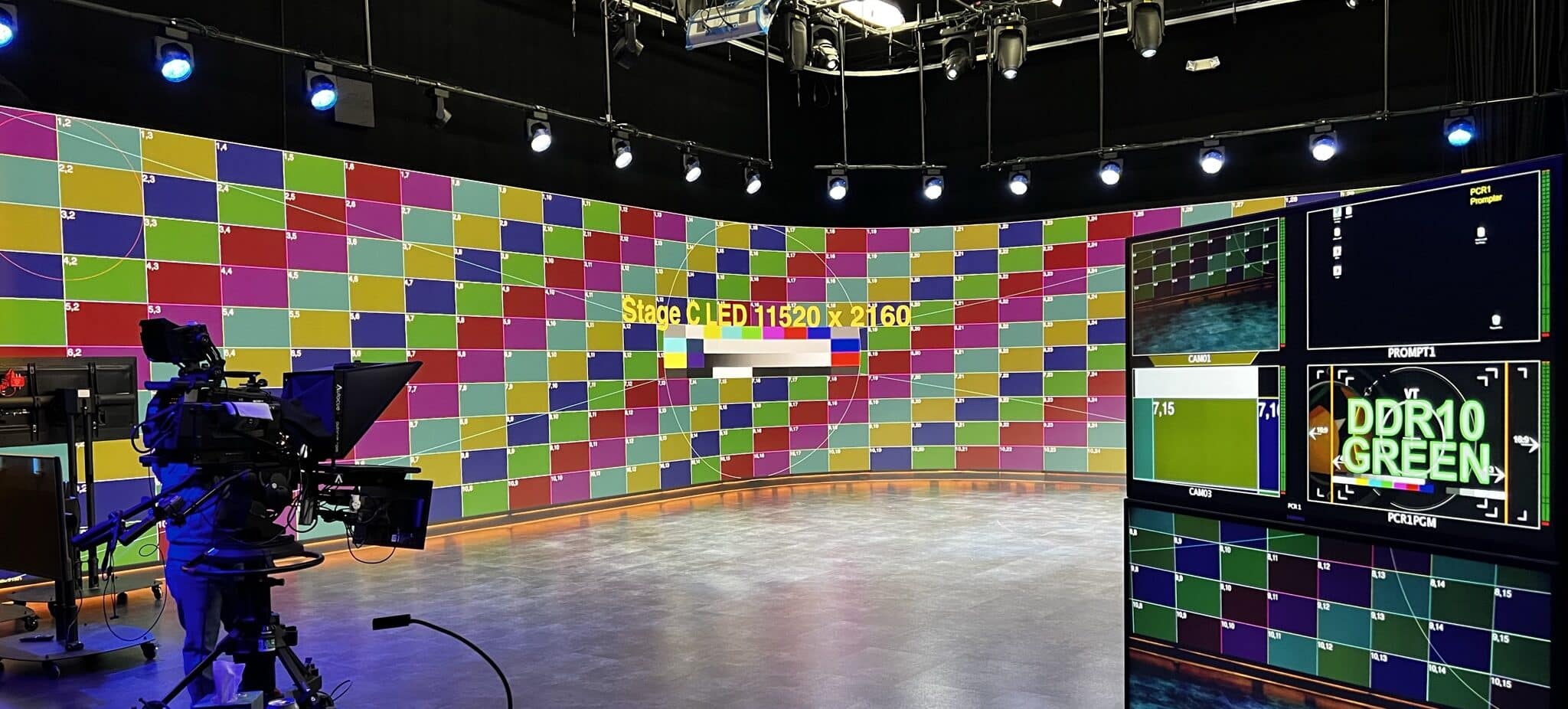
The benefits of investing in these production technologies and workflows are numerous, including:
- Increased Efficiency: Virtual production reduces the need for expensive, traditional, on-location filming, with faster turnaround for complex, multi-location scenes.
- Enhanced Creativity: Use of Unreal Engine enables real-time, in-camera adjustments of lighting, weather, and environments.
- Improved Remote Collaboration: WPP and Microsoft’s partnership leverages Microsoft Teams and Azure, allowing teams to manage, create, and edit content from anywhere and supporting hybrid work models.
This combination of technology has significantly boosted Microsoft’s in-house production capabilities, resulting in a 30% increase in content creation and a 100% increase in remote event participation!
Constant Change, Technology Forward
Virtual production and the supporting tech infrastructures are evolving at lightning speed. For the team at Microsoft, embracing a ‘technology-forward’ approach and strategy for its studio means being ahead of the tech curve and immersing themselves in the latest advances. This not only powers the LED walls and render nodes, but also ensures the infrastructure supporting these complex pipelines are state-of-the-art and future-proofed.
One of the more strategically significant decisions for the team was not about cameras, LED walls or motion tracking. It was about the shift from traditional SDI routing infrastructure to the newest standard: SMPTE 2110.
Developed by the Society of Motion Picture and Television Engineers, SMPTE 2110 is a suite of standards for transporting, synchronizing, and managing uncompressed, high-quality audio, video, and metadata over IP networks, designed to replace traditional SDI coax cables. By separating these elements into independent, routable IP streams, it enables more flexible and scalable production workflows.
Alex Salmona is part of the Engineering Team at Microsoft Production Studios and one of the Senior Video Systems Engineers. He recently spoke with the team at Puget Systems about Microsoft’s decision to fully embrace the new SMPTE 2110 standard, some of the challenges they faced making such a significant investment in time and resources, and how they would measure success of such a transition. Their rationale for doing so, in the end, reflects not only their commitment to excellence, but to a ‘technology-forward’ approach to everything they do.
“The change was actually driven by a required hardware refresh of an aging SDI routing core,” said Alex. “We had been running large SDI routers (Miranda 3G) for many years and were at the point where replacement was unavoidable. Given the refresh, the decision was essentially: if we’re replacing it anyway, go SMPTE 2110. Microsoft’s culture of being technology-forward – ‘is this where the industry is going?’ – strongly influenced the decision.”
The Benefits of SMPTE 2110 Over SDI
There are a number of advantages with the new SMPTE 2110 standards that far outweigh the now-dated SDI protocols, especially in a virtual production environment. Some of these benefits for MPS include:
- Scalability: 2110 allows them to scale by adding nodes (render nodes, camera frustum nodes, wall segments) instead of being locked to fixed SDI I/O counts.
- Flexibility vs SDI: Routing is no longer tied to a single physical router; it becomes software-defined using IP orchestration (NMOS-style control).
- Virtual production enablement: 2110 makes it possible to split Unreal workloads across multiple machines (control node, wall nodes, camera frustum nodes) in more flexible ways than direct video output (SDI / DP / HDMI) allows.
- Future-proofing: Microsoft sees 2110 as the necessary foundation for advanced virtual production, automation, and LED wall workflows long into the future.
The ROI for Microsoft Production Studio: Not What You Think
In most organizations, cost savings are a primary measure of success when calculating true ROI for major infrastructure projects. While Microsoft is always cognizant of the spend, it’s not their first priority – especially in the case of the shift from SDI to SMPTE 2110.
Alex continued, “In our case, as we considered the shift, cost savings were not the primary motivation. Microsoft’s approach to projects like this is not really a money thing, rather it’s driven by the commitment to staying ahead technologically rather than reducing spend.”
Alex Salmona, Senior Video Systems EngineerMicrosoft’s approach to projects like this is… driven by the commitment to staying ahead technologically rather than reducing spend.
In this case, large capital costs (routing, gateways, switches, LED infrastructure) were accepted as necessary to enable future workflows, not to lower operating cost. However, time savings and operational ROI was significant for the studio. Alex pointed out a number of areas where the studio recognized measurable ROI, including:
- Faster iteration on productions:
- Moving away from baked Unreal environments allows live, real-time changes (lighting, assets, environments) instead of hours-long rebuilds.
- This directly reduces turnaround time during shoots and client sessions.
- It also results in reduced risk of missing a shot when talent is on site.
- Reduced dependency on external vendors:
- Previously, external VP vendors charged very large fees and required long lead times.
- By internalizing 2110 + Unreal + LED workflows, Microsoft can execute changes immediately rather than waiting on outside teams.
- Reuse of infrastructure:
- Nodes can be repurposed between stages, walls, and cameras rather than being locked into single-function SDI pipelines.
For a virtual production studio, ROI is strongest in the added capability that SMPTE 2110 enables, including:
- Virtual production at scale (LED volumes + green screen + XR/VR workflows)
- Automation push (PTZs, robotic cameras, network-based routing)
- Advanced Unreal workflows:
- Multi-node tiling
- Multiple frustums
- Real-time compositing
- Future multi-camera LED wall techniques
- Future readiness:
- 2110 is positioned as the only viable path for higher-resolution, higher-frame-rate, multi-camera virtual production
Puget Systems: Not Just a Hardware Partner, But a Transition Partner
Deeply rooted in Puget Systems’ mission is creating a true sense of partnership with our customers. While our expertise spans every type of hardware configuration, our deeper expertise lies in working through a problem with our customers. Migrations such as the one Microsoft Production Studios is undertaking with the move from SDI to SMPTE 2110 is a prime example of exactly where we thrive.
Alex shared that “Puget Systems is an integral part of this transition for us. Not only do we need a reliable workstation foundation, we need something much deeper than that – a true understanding of every challenge, pain point and issue, as well as the ability to anticipate. That’s what we’ve found in Puget Systems.”
“Microsoft Production Studios standardized on Puget Systems workstations before my tenure, and I intentionally continued that decision.”
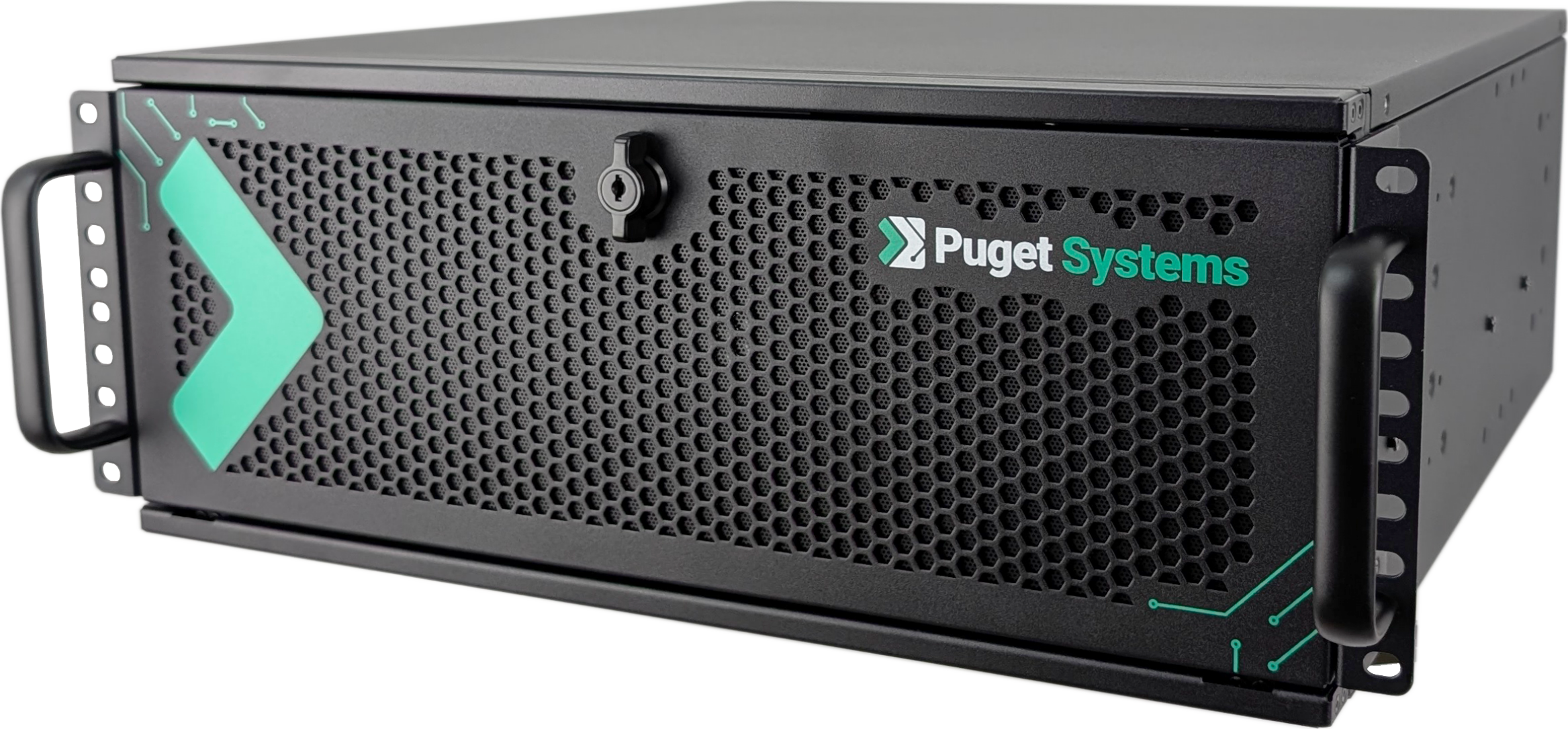
Alex spelled out key considerations for Microsoft’s partnership with Puget Systems, with the primary being stability and reliability: “the systems ‘worked’ and didn’t introduce operational friction.” This level of reliability freed time and attention for tackling higher-level problems (Unreal, SMPTE 2110, timing, networking) rather than workstation failures.
In contrasting Puget Systems with traditional large OEMs, Alex commented: “Puget uses standard, off-the-shelf parts. This offers critical operational advantages. Mainly, it allows for immediate replacement of failed components (e.g., power supplies) instead of waiting weeks. For Microsoft, time—not budget—is the limiting factor, and Puget’s component choices directly reduce downtime risk.”
Another key factor in embracing new standards such as SMPTE 2110 is the ability to enable experimental, non-standard configurations.
“Puget supported non-traditional, bleeding-edge builds,” Alex continued, “Working directly with the team at Puget Systems meant we weren’t just buying systems, we were exploring and validating different configurations together. We looked closely at including Threadripper-based rack systems, NVIDIA BlueField DPU integration, high-end GPU configurations intended for Unreal + 2110 workflows. You don’t find that kind of partnership with large OEMs.”
Alex Salmona, Senior Video Systems EngineerWorking directly with the team at Puget Systems meant we weren’t just buying systems, we were exploring and validating different configurations together.
After all was said and done, the team at Puget Systems didn’t ‘sell’ the idea of SMPTE 2110, we simply removed the friction. Our goal in this case was to provide stable systems, using off the shelf replaceable parts, but with a willingness to explore theoretical and sometimes experimental configurations. We provided, as Alex stated, “engineering collaboration when documentation was thin.” All of this made it possible for the MPS team to focus on solving the hard problems instead of fighting hardware.
For more information on how Puget Systems can collaborate with you on your next production or virtual production studio build out, please check out our Virtual Production Solutions.
Talk to an Expert
We specialize in building computer systems tailored for each of our customers – whether workstations, servers, storage solutions, or a combination of them all! We have found that the most effective way to ensure we meet your specific requirements is through direct communication. Our team of expert, non-commissioned consultants is adept at configuring systems that align precisely with your needs. They can refine a quote you’ve already saved or help you navigate our offerings by understanding your use case and workflow – all with no cost or obligation! Start a conversation with us today:
If you’d rather not wait, you can reach out to us via phone during our business hours.
Monday – Friday | 7am – 5pm (Pacific)
425-458-0273 | 1-888-784-3872