Adobe After Effects – AMD Radeon RX 6800 (XT) Performance
The number of GPU accelerated effects in After Effects has increased in recent years, but it continues to be an application that is primarily CPU bottlenecked. However, AMD cards have in the past been slightly slower than their NVIDIA counterparts. Will the new Radeon RX 6800 and 6800 XT GPUs allow AMD to match or beat NVIDIA in After Effects?

PCI-Express 4.0 vs 3.0 Video Card Performance
PCI-Express has been the standard for connecting video cards and other expansion devices inside of computers for many years now, and several generations of the technology have now passed. With each of those generations, the amount of data that can be transferred over the PCIe connection has increased. How much impact does that have on modern video cards? Is there any benefit to running a PCIe 3.0 card in a 4.0 slot, or loss if using a 4.0 card in a 3.0 slot?

Apple M1 MacBook vs PC Desktop Workstation for Adobe Creative Cloud
Apple has recently launched MacBook Air and Pro models using the new Apple M1 chip based on the Arm instruction set. While we do not usually examine performance for laptops, we wanted to see how these new chips compare to a desktop PC.
GPU Rendering – NVIDIA GeForce RTX 30 Series Multi-GPU Scaling
With the initial launches in NVIDIA’s GeForce RTX 30 Series complete, and availability getting better, it is time to look at how well these cards scale in multi-GPU configurations for rendering within Redshift, OctaneRender, and V-Ray.

AMD X570 vs B550 vs A520 Chipset Comparison
AMD has three current chipsets for their mainstream Ryzen processors, each targeting a different segment of the market with appropriate features and pricing. What is the difference between each of these chipsets, though? Knowing that can help make sure you get the right motherboard for your next workstation PC.
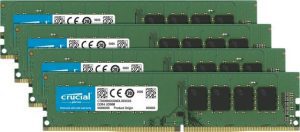
Messy Memory Speed Standards
Here at Puget Systems, we have tried to be careful about sticking to CPU manufacturer memory specifications – to ensure the best reliability, and to avoid overclocking memory controllers (which could, technically, violate CPU warranties). But increasingly complicated memory speed support schemes on many newer processors, combined with a lack of supply of certain speed modules, has forced us to adopt a new approach to what we offer in our workstations.
V-Ray GPU Rendering – NVIDIA GeForce RTX 3070, 3080 & 3090 Performance
NVIDIA’s latest generation of GPUs, the GeForce RTX 30 Series, has steadily rolled out over the course of the last several weeks. With the RTX 3070 launched most recently, how do all three models compare – both to each other, and to the previous GeForce and Titan cards? In this article we take a look at how they all stack up in Chaos Group’s V-Ray & V-Ray Next rendering engines.
RealityCapture 1.1 – NVIDIA GeForce RTX 3070, 3080 & 3090 Performance
NVIDIA’s first GeForce RTX 30 Series cards launched in September, and now the RTX 3070 has joined its bigger siblings. How does it stack up to the RTX 3080 and 3090? And how do they all compare against the previous generation of cards? Here we look at how they all perform in RealityCapture.
Pix4D 4.5.6 – NVIDIA GeForce RTX 3070, 3080 & 3090 Performance
The first cards in NVIDIA’s GeForce RTX 30 Series launched earlier this fall, and now the RTX 3070 has finally joined its bigger siblings. How does it compare to the RTX 3080 and 3090? And how do they all fare against the previous generation of GeForce and Titan cards? In this article we take a look at how these all stack up in Pix4D.
Unreal Engine 4.25 – NVIDIA GeForce RTX 3070, 3080 & 3090 Performance
The RTX 3000 series cards are here, with NVIDIA boasting significant performance gains over the previous generation. With the RTX 3070, 3080, and 3090 now launched, we can find out if these performance gains will hold true in applications like Unreal Engine?