Estimating CPU Performance using Amdahls Law
Choosing the right CPU for your system can be a daunting – yet incredibly important – task. The shear number of different models available makes it difficult to determine which CPU will give you the best possible performance while staying within your budget. In this article we will be looking at a way to estimate CPU performance based on a mathematical equation called Amdahl’s Law.
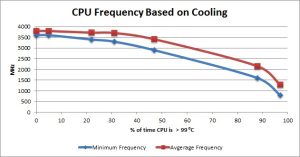
Impact of Temperature on Intel CPU Performance
While we all know that modern processors need active cooling, there is actually very little official information on how temperature affects a CPU’s performance. Do you really need a high-end liquid cooled setup to get peak performance, or is the little stock cooler that comes with most CPUs enough? In this article we will examine exactly how temperature affects CPU performance.

Star Citizen Benchmark: Arena Commander v0.8
The long-awaited dogfighting module for Star Citizen, dubbed Arena Commander, has been released to backers of the game in its pre-beta form. It only has a few ships, a pair of maps, and a handful of game modes at this point… but is it the first part of the Star Citizen game to really be playable. It is also the first chance we have to fly ships, seeing how the physics handle and how they look in their natural environment. A lot of people have been waiting many months for this, and many will be looking at performance of this module as a gauge to see whether their computers can handle Star Citizen.
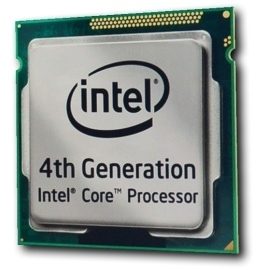
Is CPU Base Frequency Still a Relevant Spec?
Using numerous technologies, CPUs are able to dynamically adjust their frequency based on how much load is being put on it. The end result is much greater efficiency, but it calls into question whether the base frequency of a CPU really means anything on modern processors since a CPU will rarely spend much of it’s time at that advertised frequency.
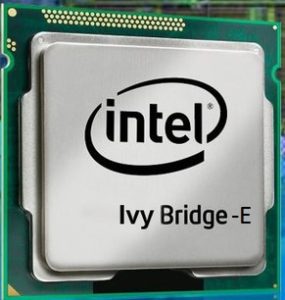
Technology Primer: Intel Ivy Bridge-E CPUs
With Ivy Bridge-E, Intel is finally moving their enthusiast CPUs to their newer 22nm manufacturing process. While this does not greatly increase the raw frequency that the CPUs are able to run at, it does allow them to draw less power while doing so. In addition to the smaller manufacturing process, the new line also has more L2 cache per core and improved memory support.
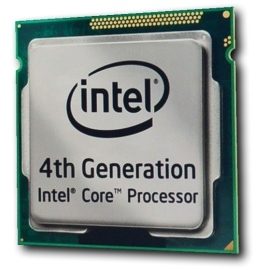
Technology Primer: Intel Haswell Desktop CPUs
Haswell is the codename for Intel’s 4th generation of processors and is the “tock” in Intel’s “tick-tock” development cycle. This means that it uses the same 22nm process as Ivy Bridge, but includes a different mounting socket and many refinements to the chip’s architecture.
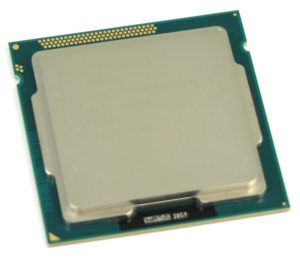
Ivy Bridge CPU TIM Paste Replacement
Even before launch of the Intel Ivy Bridge CPUs in April 2012, it was discovered that the CPUs were running a bit hotter than expected. The TIM paste was proven to be the culprit by the Japanese site PC Watch when they reported that by replacing the TIM paste they saw a load temperature drop of 8-11 *C at stock clock speeds, and an amazing 15-20*C drop in load temperatures when overclocked to 4.6 GHz.
We decided that it was time to do our own testing to see if anything has changed in recent months. The result was some very interesting data that caught us a bit by surprise.
Product Review: Cooler Master Hyper TX3 CPU Cooler
The Cooler Master Hyper TX3 CPU cooler is a medium-sized cooler designed for mid to low range CPUs. This cooler is very similar to the Scythe Kantana 3 CPU cooler currently in our product line, so the main question is: which CPU cooler is better?
Product Qualification: AMD FX-8150 CPU
In this article we will be reviewing the FX-8150 3.6GHz 8-core processor from the AMD’s new Bulldozer line. We will be taking a look at how this CPU does from a thermal standpoint as well as how it performs compared to the similarly priced Intel Core i5 2500K.
Core i3/i5/i7 Processors: Intel’s New CPU Line
When Intel first debuted the Core i7 processor line, code-named Nehalem, in late 2008 it made perfect sense. This line of quad-cores brought several new technologies: Turbo Mode, integrated memory controllers, triple-channel RAM, and Hyperthreading (making a comeback from the Pentium 4 era). There were three processors at launch, a 920, 940 and 965 – each slightly faster than the one before it, with the ‘5’ at the end of the last denoting that it was an Extreme Edition chip with some unlocked settings to help with overclocking. Over time the 940 was replaced with a 950, and then 960; the 965 also got an upgrade in the form of a 975. The naming scheme now isn’t so simple — let’s take a look.