The new RTX series from NVIDIA may not be great for Adobe applications, but they are great for DaVinci Resolve and are very interesting cards for the future due to two major new features: Tensor cores and RT cores.
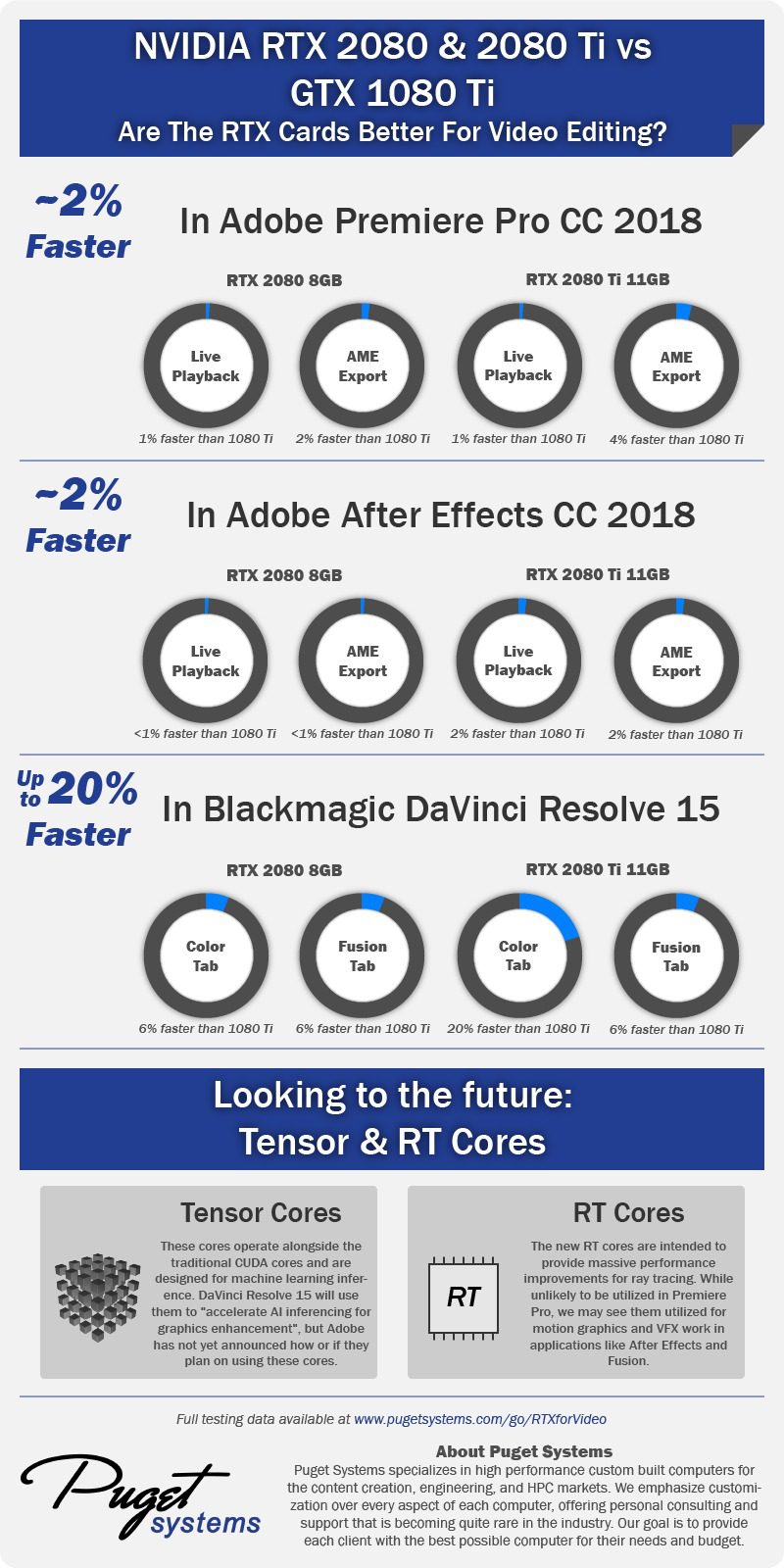
The new RTX series from NVIDIA may not be great for Adobe applications, but they are great for DaVinci Resolve and are very interesting cards for the future due to two major new features: Tensor cores and RT cores.
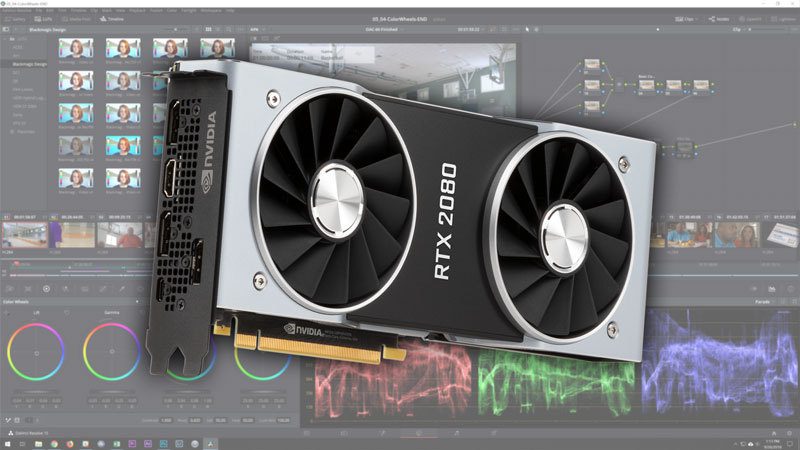
DaVinci Resolve heavily leverages the GPU to improve performance which means that the new RTX cards should give excellent performance. What makes these cards even more interesting is the fact that Blackmagic has already stated that they will be using the new turing cores on these cards to “accelerate AI inferencing for graphics enhancement”.
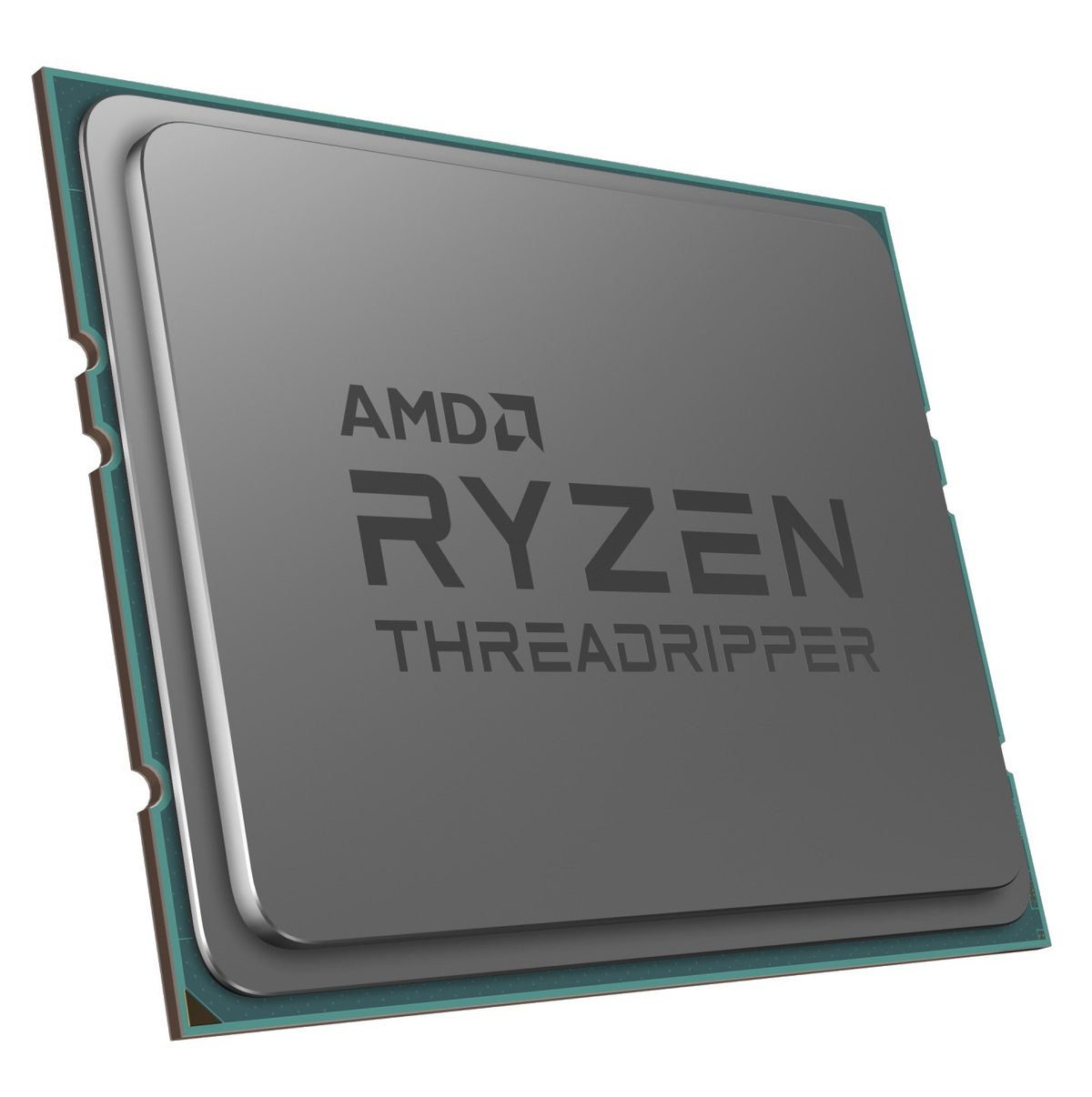
AMD’s new 2nd Gen Ryzen Threadripper processors are absolute monsters, with the 2990WX in particular having 32(!) cores. But are they better than Intel for video editing?

DaVinci Resolve is a very GPU-intensive program, but it can still require a powerful CPU to match the amount of GPU power you may put into your system. We have seen diminishing returns with higher core count CPUs in the past, so the question is whether the 32 cores in the Threadripper 2990WX will increase performance or if you are better off with a lower core count CPU.

DaVinci Resolve is able to heavily utilize the GPU (or multiple GPUs) to greatly improve performance, but are you better off using an NVIDIA GeForce card or an AMD Radeon card?.

With the rise of 4K, 6K, and even 8K footage, colorists using DaVinci Resolve are quickly discovering that the Mac ecosystem is simply not able to give them the performance they need. Most people know that they can get more out of a PC, but just how much faster is a PC versus a Mac Pro or iMac Pro?

Linux is often considered the operating system of choice for power users, but does DaVinci Resolve actually perform any better in it than in Windows? Even if it does, is it enough to compensate for Linux’s much higher learning curve?

Blackmagic’s DaVinci Resolve is known for how well it utilizes multiple GPUs to improve performance, but is this still true with cards like the new NVIDIA Titan V? And do you really need a Xeon or Dual Xeon setup to get the best performance possible?

The NVIDIA Titan V has many the features that are not useful in DaVinci Resolve, but it’s raw power allows it to give the highest single GPU playback performance of any GPU we have every tested.

DaVinci Resolve has long been known to greatly benefit from multiple GPUs, but is this still true or has the recent launch of Resolve 14 changed things?
Puget Systems builds custom workstations, servers and storage solutions tailored for your work.
We provide:
Extensive performance testing
making you more productive and giving better value for your money
Reliable computers
with fewer crashes means more time working & less time waiting
Support that understands
your complex workflows and can get you back up & running ASAP
A proven track record
as shown by our case studies and customer testimonials