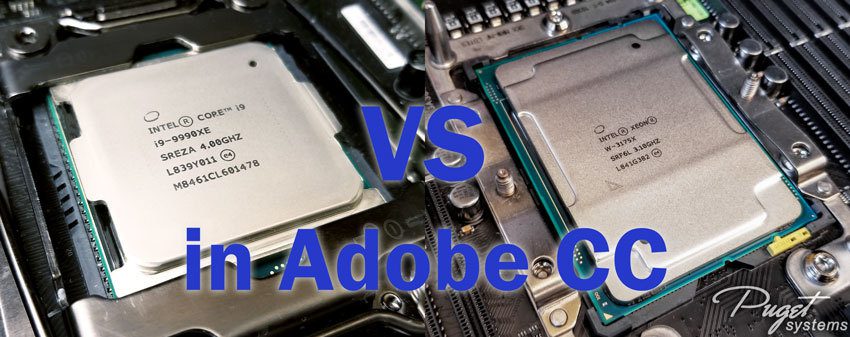
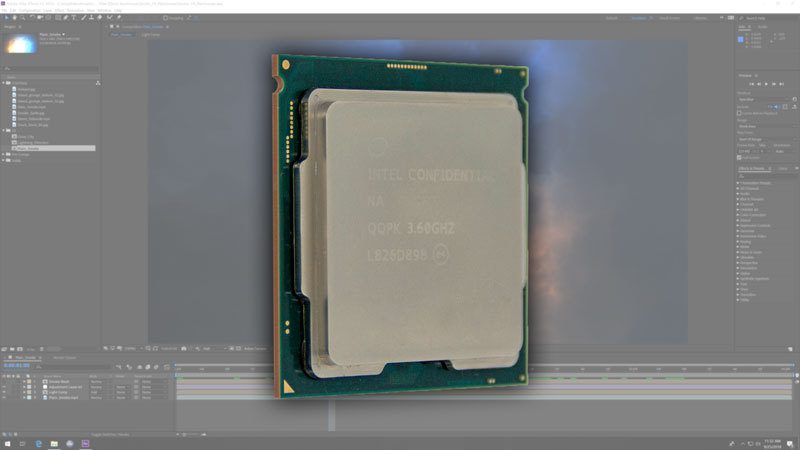
Intel has recently released a pair of highly exclusive – and expensive – processors: the Core i9 9990XE and Xeon W-3175X. The question is: does either one make sense to use for Adobe Creative Cloud applications?


Intel has recently released a pair of highly exclusive – and expensive – processors: the Core i9 9990XE and Xeon W-3175X. The question is: does either one make sense to use for Adobe Creative Cloud applications?

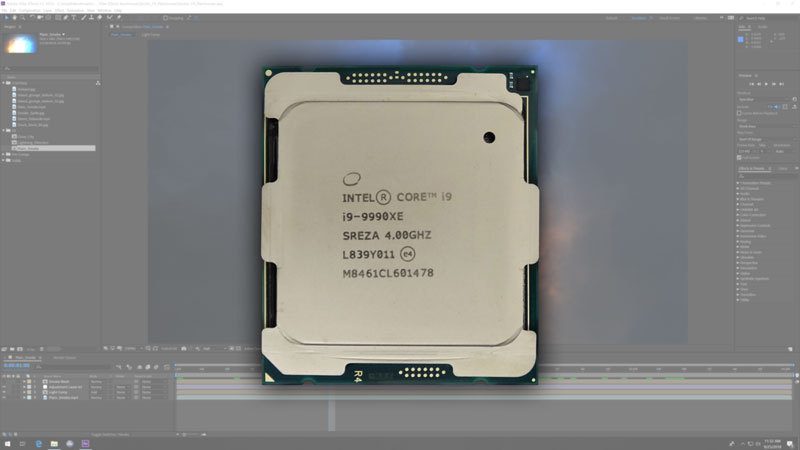
The Intel Core i9 9990XE 14-core CPU is a special, OEM-only, no warranty processor that is only available to select system manufacturers like Puget Systems. While it is very hard to get, it should actually be among the fastest CPUs to use for After Effects as it has terrific performance for both lightly-threaded and highly-threaded tasks.

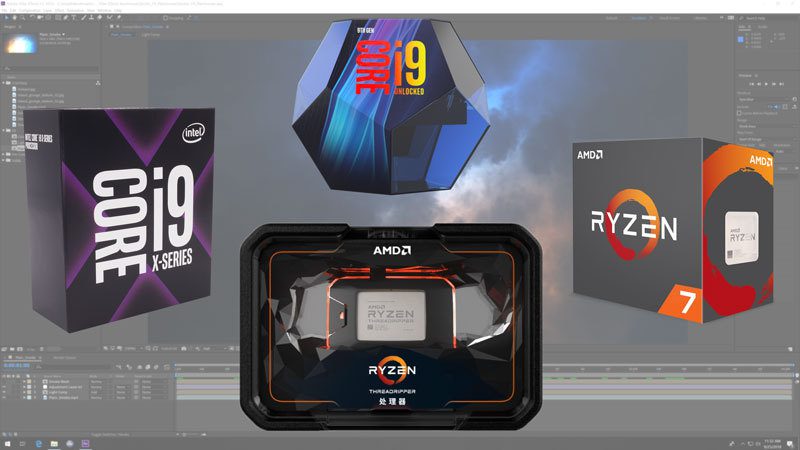
Choosing the right hardware for your new After Effects workstation can be overwhelming with hundreds or thousands of different hardware components to choose from. In this article, we are going to be benchmarking – using our newly released Puget Systems After Effects CC Benchmark – a wide range of processors from Intel and AMD including the Intel 9th Gen, Intel X-series, AMD Ryzen 2nd Gen, and AMD Threadripper 2nd Gen CPU lines. In addition, we will be comparing them to a current Mac Pro 12 Core and iMac Pro 14 Core for those that are considering going with a Mac-based workstation rather than a PC.

The new Intel Core X-series Processors are here and while they do have a small frequency bump and a native fix for Spectre & Meltdown, they do not have any more cores than the previous generation. However, After Effects is not as well threaded as it used to be, which means that the lack of a core count increase is unlikely to be a problem.

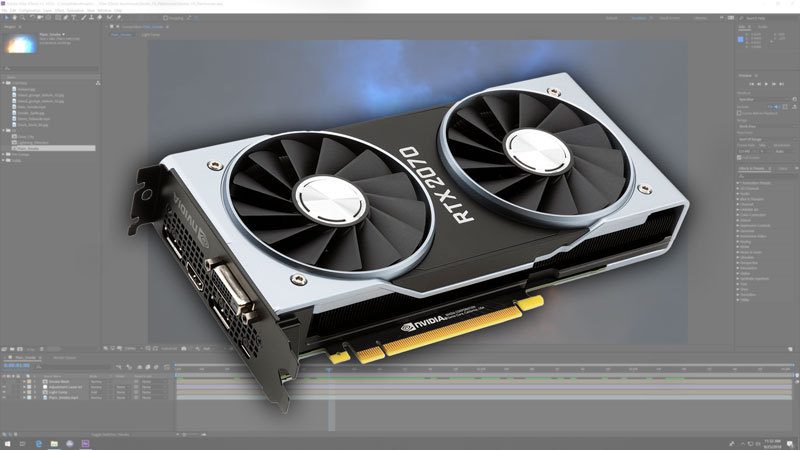
While we just recently tested the RTX 2080 and 2080 Ti in After Effects CC 2018, a number of changes have happened that prompted us to update our testing. Will the update to CC 2019, launch of the RTX 2070, or launch of the Intel Core i9 9900K change our conclusions or are powerful GPUs still unnecessary for most Ae users?

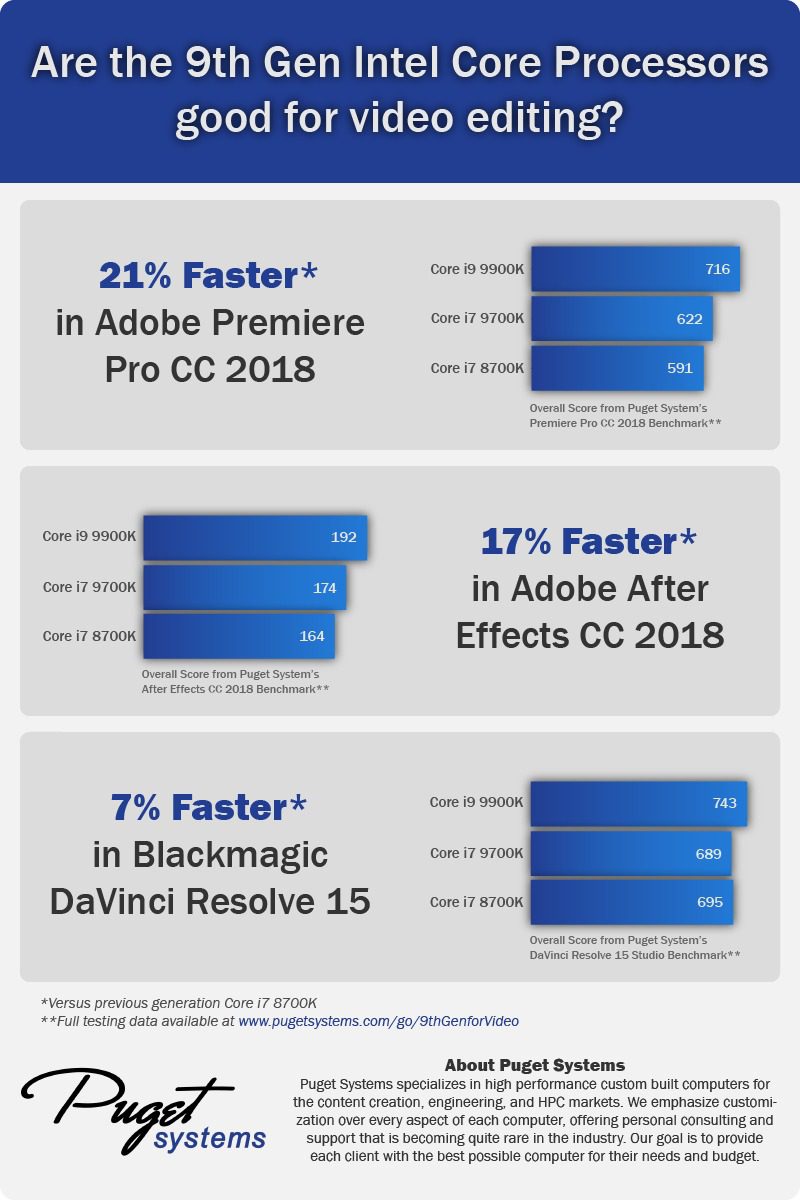
Intel’s new 9th Gen Core Processors include both a small frequency bump and an increase in core count. Due to these improvements, these CPUs fare extremely well in video editing applications, performing close to 20% faster than the i7 8700K in many Adobe applications.

After Effects may not be quite as well threaded as it used to be, but there is still some performance gains to be had with higher core counts. Since the new 9th Gen CPUs from Intel include both a higher core count and a higher operating frequency, they should perform great in After Effects.

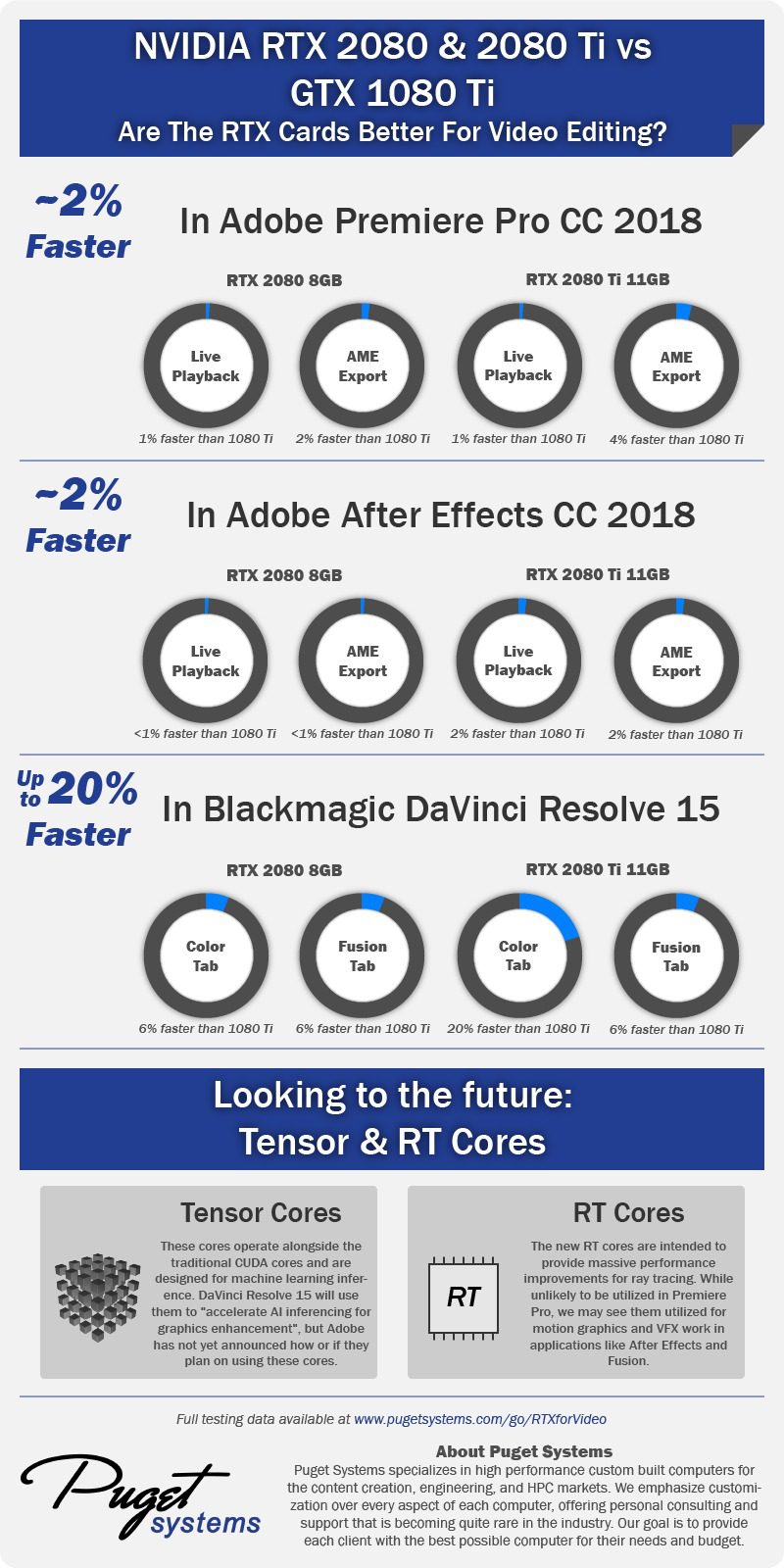
The new RTX series from NVIDIA may not be great for Adobe applications, but they are great for DaVinci Resolve and are very interesting cards for the future due to two major new features: Tensor cores and RT cores.

After Effects has had a bit of a rocky relationship with video cards ever since GPU acceleration was added back in 2015 with little reason to use more than a mid-range video card. However, NVIDIA’s new RTX series cards are here and they bring to the table two new features that may finally give you a reason to invest in a high-end GPU for After Effects: Tensor cores and RT cores.

AMD’s new 2nd Gen Ryzen Threadripper processors are absolute monsters, with the 2990WX in particular having 32(!) cores. But are they better than Intel for video editing?