DaVinci Resolve is able to heavily utilize the GPU (or multiple GPUs) to greatly improve performance, but are you better off using an NVIDIA GeForce card or an AMD Radeon card?.

DaVinci Resolve is able to heavily utilize the GPU (or multiple GPUs) to greatly improve performance, but are you better off using an NVIDIA GeForce card or an AMD Radeon card?.

After Effects may not be able to take advantage of the GPU as much as other applications, but the question still comes up: AMD Radeon or NVIDIA GeForce? Which performs better in Ae and which will give you more performance for your dollar?
At first glace, the recent addition of “hardware acceleration” when exporting to H.264 and H.265 in Media Encoder and Premiere Pro provides a huge boost in performance for many users. Unfortunately, it is not a perfect technology and result in lower quality video than using the standard “Software only” mode.
Among the updates notes for Adobe Premiere Pro CC July 2018 (version 12.1.2) was a small note of “Performance improvements for decoding RED Camera Formats”. The question is, does this update dramatically increase performance if you work with RED footage or is it just a minor update that doesn’t actually affect most users?
AMD vs NVIDIA is typically a very hot topic for PC enthusiasts and we often get requests to compare AMD’s Radeon Vega video cards to their NVIDIA GeForce counterparts. Premiere Pro is able to take better advantage of the GPU than most other Adobe applications, but will AMD or NVIDIA give you more bang for your buck?

Depending on how you use Media Encoder, the GPU may or may not have a large impact on performance. If you use it primarily as a transcoding tool, it should be mostly CPU-bound – so is there any reason to use NVIDIA GeForce over AMD Radeon or vice versa?

Many users require the use of a workstation graphics card as that is the only way to display 10-bit color in Photoshop. But will an NVIDIA Quadro or an AMD Radeon Pro video card give you the best performance for your dollar?

We are often asked how AMD’s Radeon Vega video cards compare to their NVIDIA GeForce counterparts. Photoshop rarely benefits from having a powerful GPU, but there is still a measurable difference between these two brands of cards.

PhotoScan makes use of the video cards in a computer to assist with the computation of certain steps. As such, the model of video card used can have an impact on the amount of time those steps take. In this article, we take a look at AMD’s Radeon line – including the Vega 64 and 56 – and see how they stack up to NVIDIA’s GeForce 1000-series.
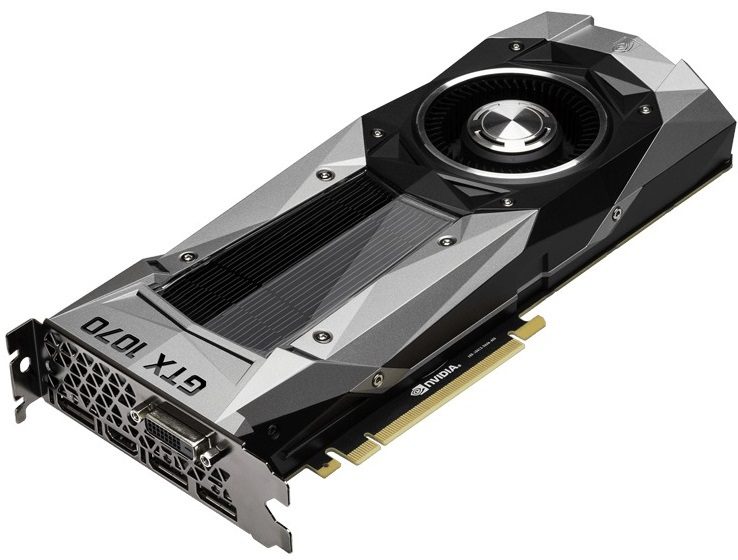
GPU rendering engines like OctaneRender and Redshift utilize the computational power of the graphics processing chips on video cards to create photo-realistic images and animations. The more powerful the video card, the faster the rendering process goes – and multiple video cards can be used together to further improve performance. But can those video cards be a mix of different models, or do they all need to be identical?
Puget Systems builds custom workstations, servers and storage solutions tailored for your work.
We provide:
Extensive performance testing
making you more productive and giving better value for your money
Reliable computers
with fewer crashes means more time working & less time waiting
Support that understands
your complex workflows and can get you back up & running ASAP
A proven track record
as shown by our case studies and customer testimonials