The Radeon VII is a very interesting card for DaVinci Resolve due to its 16GB of VRAM which is twice what you would get from a similarly priced NVIDIA GPU. But is it able to keep up in terms of raw performance?
The Radeon VII is a very interesting card for DaVinci Resolve due to its 16GB of VRAM which is twice what you would get from a similarly priced NVIDIA GPU. But is it able to keep up in terms of raw performance?
While After Effects is starting to utilize the GPU more and more, it currently is almost always limited by the performance of your CPU. So while AMD’s Radeon VII is an extremely robust card with twice the VRAM as a comparably priced NVIDIA GeForce card, will Ae actually be able to take advantage of its power?
AMD’s Radeon VII is an extremely robust card on paper, having twice the VRAM as a comparably priced NVIDIA GeForce card. However, while 16GB of video memory is nice, it is rarely required for Photoshop. Does the Radeon VII have a performance advantage in Photoshop as well, or is going with NVIDIA still a better option?
We have recently noticed a 10-20% performance drop in DaVinci Resolve that is due to an issue with the latest NVIDIA GPU drivers. What exactly is happening and how can you fix the problem?

Is your Windows OS failing to boot due to a corrupted MBR or BCD? This article will detail the steps for resolving and getting you back up and running.
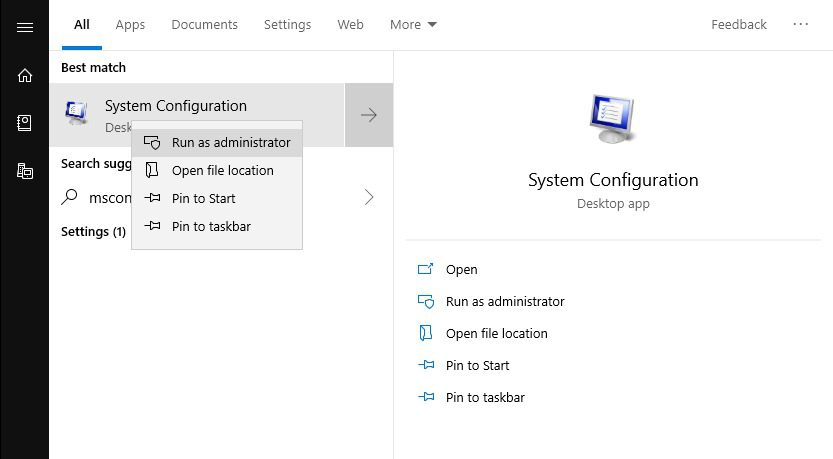
This article will guide you through the process of performing a clean boot in Windows 10.

In the latest version of Lightroom Classic CC (8.2), Adobe has added a new featured called “Enhanced Details” which uses machine learning to improve the quality of the debayering process for RAW images. This is very GPU-intensive, so we wanted to see exactly how much faster it can be on a modern, high-end GPU.

During a recent discussion with an engineer who was considering having us build him a workstation, he made a comment about our company: “You’re big enough, but not too big.”

Your new Puget System just arrived and you are eager to set it up and get to work. Here are some considerations to keep in the back of your mind while you get setup.

There are 2 recent Intel processors that are really strange, the Xeon W-3175X 28-core, and the Core i9 9990XE overclocked 14-core. I was able to get a little time in on the these processors. I ran a couple of numerical compute performance tests with the Intel MKL Linpack benchmark and NAMD. I used the same system image that I had used recently to look at 3 Intel 8-core processors so I will include those results here as well. **There will be results for W-3175, 9990XE, 9800X, W-2145, and 9900K**.
Puget Systems builds custom workstations, servers and storage solutions tailored for your work.
We provide:
Extensive performance testing
making you more productive and giving better value for your money
Reliable computers
with fewer crashes means more time working & less time waiting
Support that understands
your complex workflows and can get you back up & running ASAP
A proven track record
as shown by our case studies and customer testimonials