Puget Systems Launches ‘Puget Labs Certification Program’ to Help Customers Identify Best Options for their Workflow Needs

Puget Systems Launches ‘Puget Labs Certification Program’ to Help Customers Identify Best Options for their Workflow Needs
For a long time here at Puget Systems, we have been putting together computer hardware recommendations for a wide range of applications. A lot of that advice is gathered from the far corners of the internet, by a range of different folks here within our company, but our Labs team delves especially deep into certain software and workflows. As such, we are beginning to brand some of our recommended systems with an additional “Labs Certified” status – and I wanted to take a moment to give you some details on why we are doing this and what it means for you, our customer.

DaVinci Resolve is a feature-rich application used for a wide range of post-production tasks and whether you primarily work in the Edit, Color, or Fusion tabs (or all three!), nothing is worse than when your computer gets in the way of your creativity. In this 45-minute webinar, Matt Bach will cover the best hardware for DaVinci Resolve – from CPU, GPU, RAM, and storage – and how your decision may change depending on your workflow.
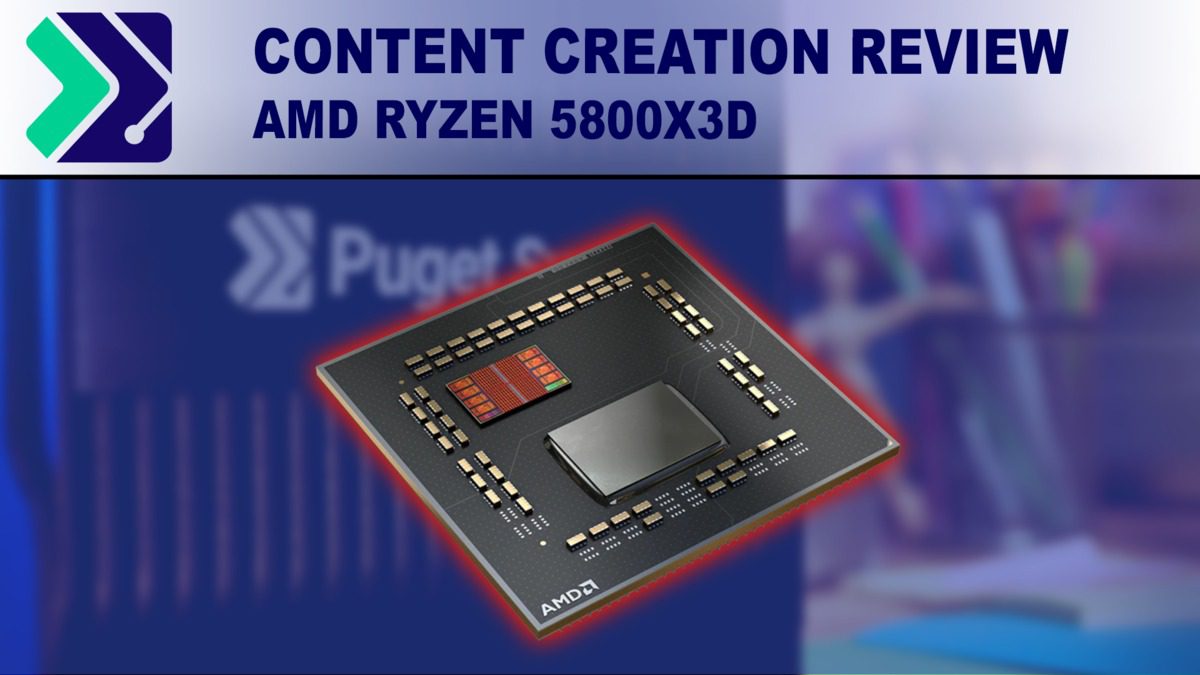
AMD has recently released the Ryzen 5800X3D, which is their first desktop processor using 3D-stacked L3 cache. This CPU has been very clearly marketed towards the gaming industry – and not content creation – but we wanted to see how well it holds up in content creation applications like Photoshop and Premiere Pro.

We have a new collection of GPU accelerated Molecular Dynamics benchmark packages put together for GROMACS, NAMD 2, and NAMD 3-alpha10. (The benchmark packages will be available to the public soon.) In this post we present results for,
– 3 applications: GROMACS, NAND 2 and NAMD 3alpha10,
– 8 MD simulations,
– 12 different NVIDIA GPUs,
– 96 total results.

For several years, both AMD and Intel have offered five general categories of CPUs: Mobile, Consumer Desktop, High-End Desktop, Server, and Workstation. Something strange has been happening to the middle segment, though: HEDT processors are disappearing!
With the popularity of virtual production, many people are looking to build computer systems that are optimized for high-end video editing, compositing, and color work. However, the performance requirements of LED walls, green screen virtual sets, and motion capture can vary widely, depending upon the type of hardware being used and the complexity of the environment being built.
In this 45-minute webinar, Kelly will look into the optimal PC hardware for Virtual Production. He will discuss how the CPU, video card, RAM, and other components affect performance for LED Walls, green screens, and motion capture workflows.
A quick look at what hardware components have been popular in workstations we have sold here at Puget Systems over the last six months.

Puget Systems has entered into a strategic partnership with Vu Studios, a full-service video and virtual production studio based in Tampa, FL in a collaborative effort to drive standardization of virtual production hardware for the industry. The two companies have also entered into an agreement naming Puget Systems as the preferred workstations provider for all Vu Studios facilities across the country.

Vū Names Puget Systems as Exclusive Computer Hardware Vendor for All Facilities Nationwide; Debuts New Las Vegas Location Powered by Puget Systems
Puget Systems builds custom workstations, servers and storage solutions tailored for your work.
We provide:
Extensive performance testing
making you more productive and giving better value for your money
Reliable computers
with fewer crashes means more time working & less time waiting
Support that understands
your complex workflows and can get you back up & running ASAP
A proven track record
as shown by our case studies and customer testimonials