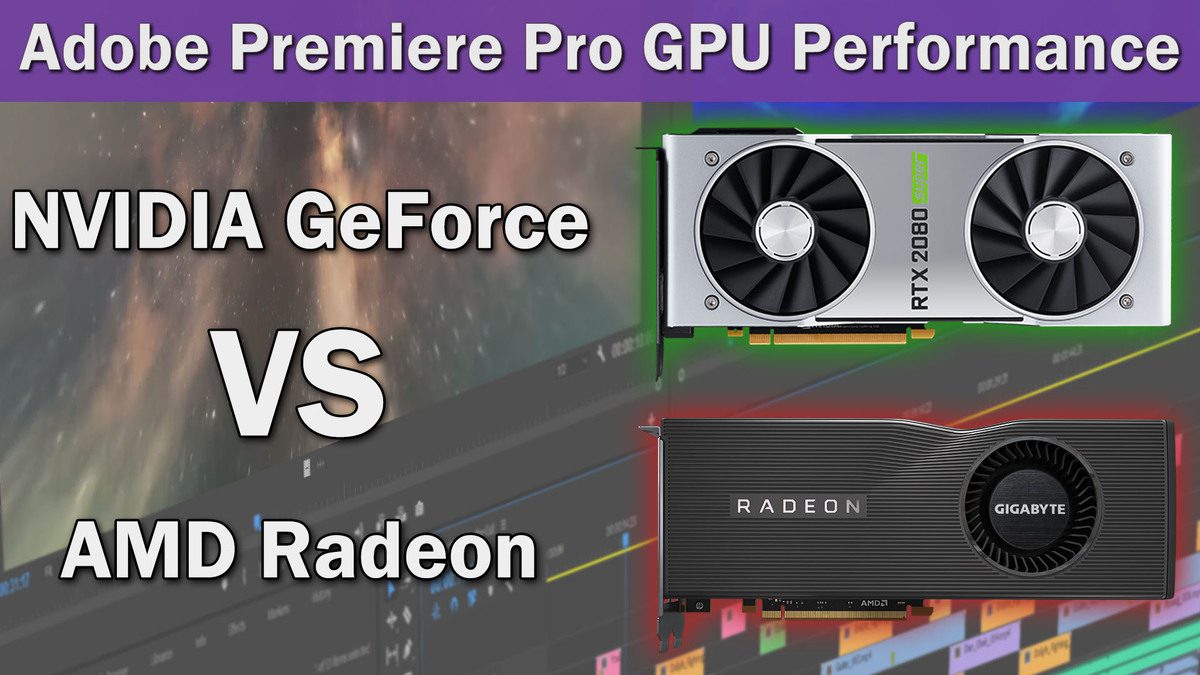
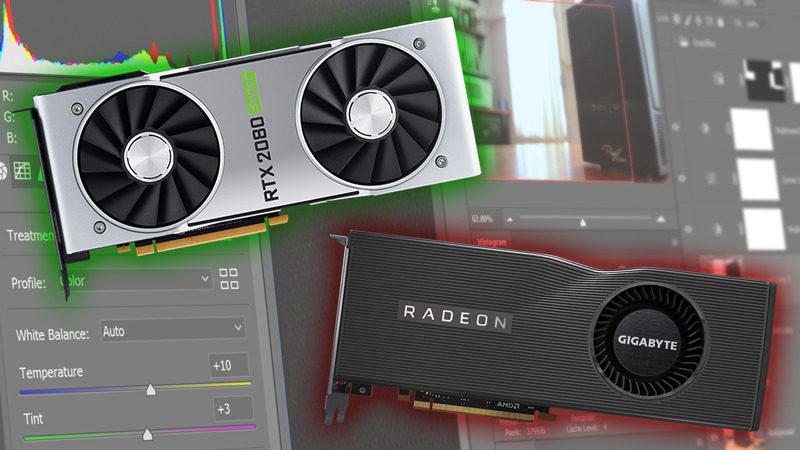
Depending on the number of GPU-accelerated effects you use, a higher-end GPU can give you a nice performance boost in Premiere Pro. But is it better to go with an NVIDIA GeForce RTX video card, or one of AMD’s Radeon GPUs?


Depending on the number of GPU-accelerated effects you use, a higher-end GPU can give you a nice performance boost in Premiere Pro. But is it better to go with an NVIDIA GeForce RTX video card, or one of AMD’s Radeon GPUs?

We put several Quadro video cards to the test in Autodesk Inventor 2020.2, using Inventor Bench, to see if there is a benefit to having a higher performance GPU in this application.

We put several Quadro video cards to the test in Autodesk Revit 2020.2, using RFO Benchmark, to see if there is a benefit to having a higher performance GPU in this application.

NVIDIA does not consider dual NVLink – using two pairs of cards, each connected via a NVLink bridge and enabled via SLI – to be a supported configuration with GeForce cards in Windows, but some driver releases do allow it to function. This article will look at how to get that working, if you really must have it, and why we are not offering it on our workstations here at Puget Systems.

With the recent release of SOLIDWORKS 2020’s first service pack, we thought it would be a good time to do a roundup of NVIDIA Quadro video card performance with regards to modeling in SOLIDWORKS.

One of the big advantages of GPU-based rendering is that you can easily put multiple video cards inside a single workstation. How much benefit does each additional card provide for V-Ray Next, though? We put four GeForce RTX 2080 Ti video cards to the test to find out!

Both AMD and NVIDIA have recently released a number of new video cards including the Radeon RX 5700 XT and the NVIDIA SUPER cards. Photoshop only uses the GPU to accelerate a small (but growing) list of effects, however, so is there any benefit to using any of these new card?

V-Ray Next is made up of two rendering engines: a traditional CPU based renderer, as well as a GPU-based hybrid engine that can run on both GPUs and CPUs for extra performance. With the launch of NVIDIA’s new GeForce RTX “SUPER” series of video cards, we are taking a look at how the whole RTX lineup performs on the GPU side of V-Ray Next.

OctaneRender is a GPU-based rendering engine, utilizing the CUDA programming language on NVIDIA-based graphics cards. With the launch of NVIDIA’s new GeForce RTX “SUPER” series of video cards, we are taking a look at how the whole RTX lineup performs on both the current OctaneRender 4 and the upcoming 2019 release which adds support for RTX technology and greatly increased rendering speeds.

Redshift is a GPU-based rendering engine, now owned by Maxon and available bundled with Cinema 4D – as well as in the form of plug-ins for other 3D applications. It was written to use NVIDIA’s CUDA graphics programming language, and since NVIDIA recently refreshed their GeForce series with new 2060, 2070, and 2080 “SUPER” cards we thought it would be a good time to re-test the whole RTX lineup.