More than any other NLE, having a fast GPU (or multiple GPUs) is incredibly important in DaVinci Resolve. With both AMD and NVIDIA recently launching a number of new video cards, it is time to once again see what the best GPU is for Resolve.
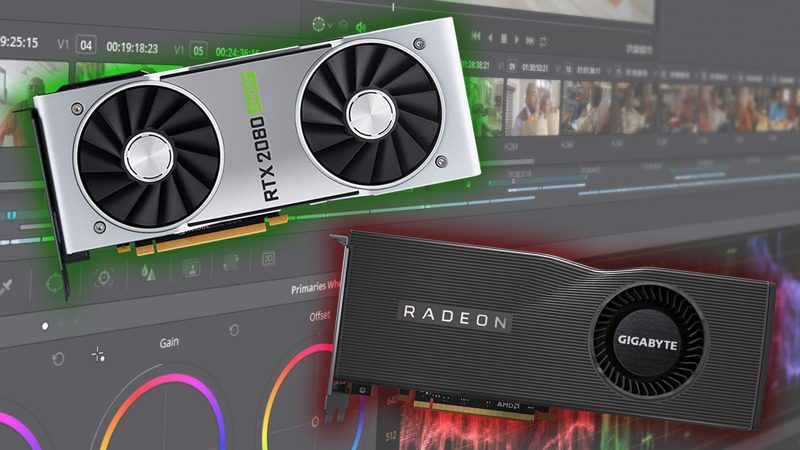
More than any other NLE, having a fast GPU (or multiple GPUs) is incredibly important in DaVinci Resolve. With both AMD and NVIDIA recently launching a number of new video cards, it is time to once again see what the best GPU is for Resolve.

Intel updated their workstation-oriented Xeon W processor line recently, using technology from the high-performance Xeon Scalable series. This means more cores in a single-socket platform than Intel has offered before, and since high core count usually translates to fast rendering speeds we are taking a look at how these new CPUs stack up in V-Ray Next.

Intel updated their workstation-oriented Xeon W processor line recently, using technology from the high-performance Xeon Scalable series. This means more cores in a single-socket platform than Intel has offered before, and since high core count usually translates to fast rendering speeds we are taking a look at how these new CPUs do in Cinema 4D’s native renderer.
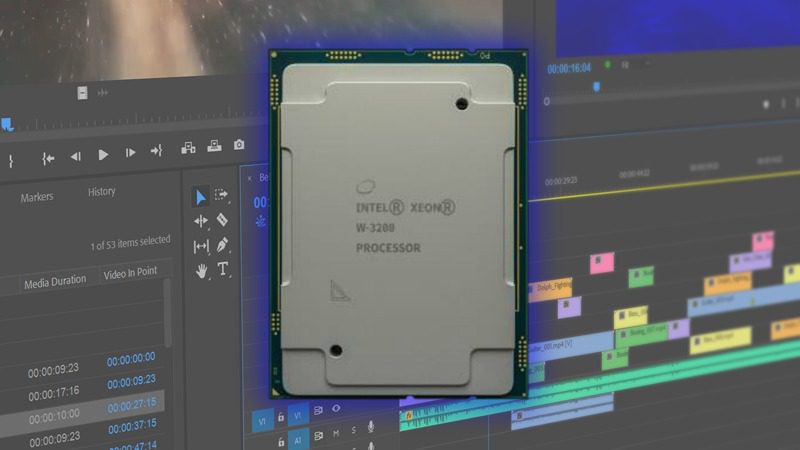
While the choice between using an Intel X-series or Intel Xeon W processor is often decided by more than straight-up performance, it is still useful to know exactly how much performance you might be losing in order to gain Xeon-exclusive features like 64 PCI-E lanes or Reg. ECC memory support. To that end, in this post we will be benchmarking the Intel X-series, Intel Xeon W-3200, as well as the AMD Threadripper processors in a range of applications including Premiere Pro, After Effects, Photoshop, and DaVinci Resolve.

Our own senior hardware analyst, Matt Bach, gave a presentation at PNY’s booth at SIGGRAPH 2019 on 6K to 8K editing workflows and what you need to be able to handle it.

One of the big advantages of GPU-based rendering is that you can easily put multiple video cards inside a single workstation. How much benefit does each additional card provide for V-Ray Next, though? We put four GeForce RTX 2080 Ti video cards to the test to find out!

In this post I’ve done more testing with Ryzen 3900X looking at the effect of BLAS libraries on a simple but computationally demanding problem with Python numpy. The results may surprise you! I start with a little bit of history of Intel vs AMD performance to give you what may be a new perspective on the issue.
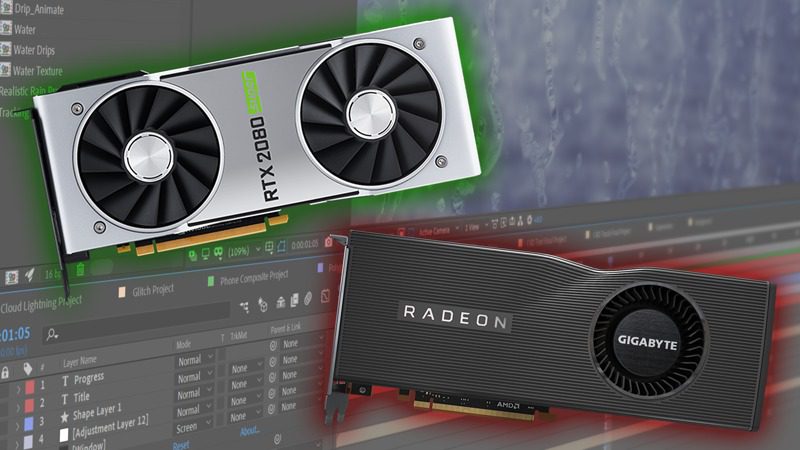
Outside of very specific situations, After Effects is usually going to be limited more by your CPU than your GPU. However, the more GPU accelerated effects you use, the larger the benefit to using a faster video card. Both AMD and NVIDIA have recently released a number of new video cards, but is there any benefit to using them in After Effects?
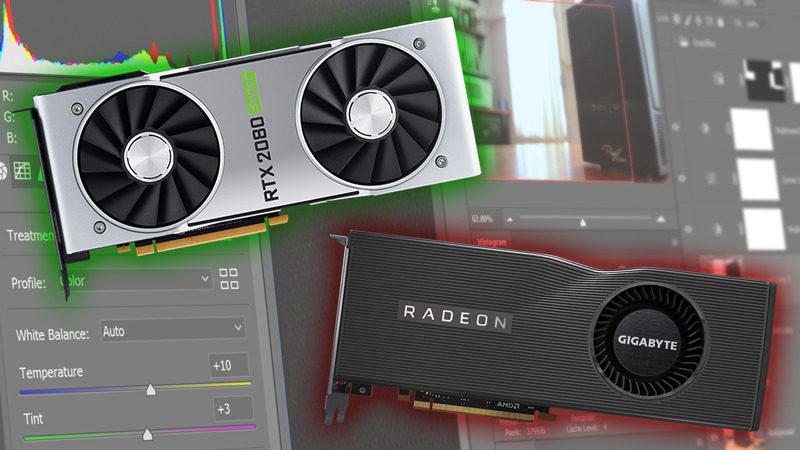
Both AMD and NVIDIA have recently released a number of new video cards including the Radeon RX 5700 XT and the NVIDIA SUPER cards. Photoshop only uses the GPU to accelerate a small (but growing) list of effects, however, so is there any benefit to using any of these new card?
This is a short post showing a performance comparison with the RTX2070 Super and several GPU configurations from recent testing. The comparison is with TensorFlow running a ResNet-50 and Big-LSTM benchmark.
Puget Systems builds custom workstations, servers and storage solutions tailored for your work.
We provide:
Extensive performance testing
making you more productive and giving better value for your money
Reliable computers
with fewer crashes means more time working & less time waiting
Support that understands
your complex workflows and can get you back up & running ASAP
A proven track record
as shown by our case studies and customer testimonials