VRFocus sat down with Wilson Chau, Customer Service Lead at Puget Systems to discuss the companies focus to deliver virtual reality (VR) ready solutions.

VRFocus sat down with Wilson Chau, Customer Service Lead at Puget Systems to discuss the companies focus to deliver virtual reality (VR) ready solutions.

This is the second post on using Pytorch for Scientific computing. I’m doing an example from Quantum Mechanics. In this post we go through the formulas that need to coded and write them up in PyTorch and give everything a test.

AMD just updated their high-performance Threadripper processor series, and the new top-end model – the 2990WX – has given the highest Cinebench multi-core score we’ve seen from a single CPU. This article will look at how it stacks up to the older Threadripper 1950X and a selection of Intel chips… and just as importantly, how it performs in single-core mode.

AMD just updated their high-performance Threadripper processor series, and the new top-end model – the 2990WX – is the fastest single CPU we’ve ever tested in V-Ray. This article will look at how it stacks up to other AMD and Intel chips, as well as Intel’s dual Xeon configurations.
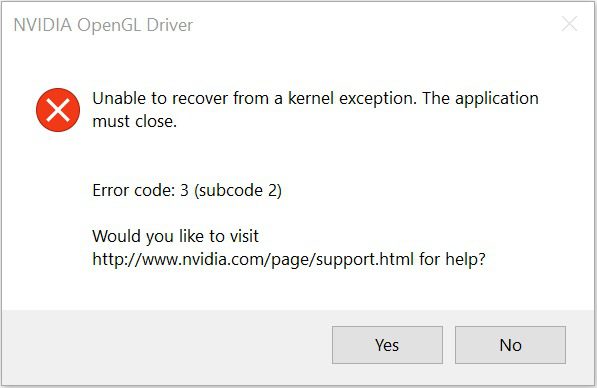
If you are encountering an OpenGL crash due to kernel exception error code: 3 (subcode 2), then check out this article for a solution!

DaVinci Resolve is able to heavily utilize the GPU (or multiple GPUs) to greatly improve performance, but are you better off using an NVIDIA GeForce card or an AMD Radeon card?.

Last week my daughter got pulled over by a policewoman just after midnight for having a light out over the back license plate. After a short reminder that she shouldn’t be driving past midnight because she’s not 18-years old yet, the policewoman let her off without a citation or warning if she promised to replace the light.

After Effects may not be able to take advantage of the GPU as much as other applications, but the question still comes up: AMD Radeon or NVIDIA GeForce? Which performs better in Ae and which will give you more performance for your dollar?

At first glace, the recent addition of “hardware acceleration” when exporting to H.264 and H.265 in Media Encoder and Premiere Pro provides a huge boost in performance for many users. Unfortunately, it is not a perfect technology and result in lower quality video than using the standard “Software only” mode.

Among the updates notes for Adobe Premiere Pro CC July 2018 (version 12.1.2) was a small note of “Performance improvements for decoding RED Camera Formats”. The question is, does this update dramatically increase performance if you work with RED footage or is it just a minor update that doesn’t actually affect most users?
Puget Systems builds custom workstations, servers and storage solutions tailored for your work.
We provide:
Extensive performance testing
making you more productive and giving better value for your money
Reliable computers
with fewer crashes means more time working & less time waiting
Support that understands
your complex workflows and can get you back up & running ASAP
A proven track record
as shown by our case studies and customer testimonials