TensorFlow is a very powerful numerical computing framework. However, like any large research level program it can be challenging to install and configure. In this post I’ll try to give some guidance on relatively easy ways to get started with TensorFlow. I’ll only look at relatively simple “CPU only” Installs with “standard” Python and Anaconda Python in this post. (I also have a quick test with Intel Python.)


Case Study with VIRA Insight
VIRA Insight is a manufacturer specializing in custom retail store environments. The creative team uses a certified Puget Systems workstation to produce realistic 3D renderings.

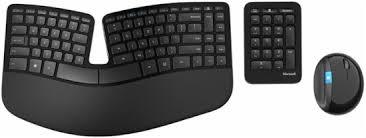
Keyboard and Mouse Considerations
Looking for Keyboard and Mouse? These are some things to be aware of before making your choice.
TensorFlow Introduction What is TensorFlow
TensorFlow is on it’s way to becoming the “standard” framework for machine learning. There are many reasons for that, and, it is not just for machine learning! In this post I’ll give a descriptive introduction to TensorFlow. This is the first post in a series on how to work with TensorFlow. Hopefully after reading thsi you will have a better understanding of the What? and Why? of TensorFlow.
The Storm That Is Fortnite
It’s been a few years since a game caught the interest of my family.
I worked in sales at Puget Systems when I began hearing customers mention a game called Minecraft. The simple, blocky nature of the game carried over to the hardware requirements. Minecraft didn’t require a high-end gaming rig. My three oldest couldn’t get enough of building homes, trying to stay alive and setting anything they could find on fire with lava.

DaVinci Resolve 14 Performance: Windows vs Linux
Linux is often considered the operating system of choice for power users, but does DaVinci Resolve actually perform any better in it than in Windows? Even if it does, is it enough to compensate for Linux’s much higher learning curve?

GPU Technology Conference 2018
Puget Systems will be exhibiting at this year’s GPU Technology Conference, March 26th – 29th. We will be displaying our new GPU accelerated workstations including those for photogrammetry, rendering, virtual reality and machine learning. Come meet with us at Booth #705!
NAMD Performance on Xeon-Scalable 8180 and 8 GTX 1080Ti GPUs
This post will look at the molecular dynamics program, NAMD. NAMD has good GPU acceleration but is heavily dependent on CPU performance as well. It achieves best performance when there is a proper balance between CPU and GPU. The system under test has 2 Xeon 8180 28-core CPU’s. That’s the current top of the line Intel processor. We’ll see how many GPU’s we can add to those Xeon 8180 CPU’s to get optimal CPU/GPU compute balance with NAMD.

After Effects CC 2018 CPU Comparison: Intel 8th Gen vs X-series vs Ryzen vs Threadripper
After Effects is a tricky application when it comes to choosing a CPU as there are many factors that come into play. Not only is there raw rendering performance, but the new integration with Cinema4D and even the amount of system RAM you need all play a role in determining what CPU is the ideal choice for your workflow.

SOLIDWORKS 2018 GPU Comparison: Monster (Sized) Model
Following up on our previous article about SOLIDWORKS 2018 GPU performance, we have been provided with an extremely complex assembly that finally shows some performance difference between low- and high-end video cards within the same family. Armed with this 4372 part, 40.9 million triangle model we ran through testing on multiple Quadro and Radeon Pro graphics cards to see how they handle such a monstrously large project.