This article looks at several motherboard chipsets, including X299 and X399, comparing how well they handle performance scaling across multiple GPUs in V-Ray 3.57.01.

This article looks at several motherboard chipsets, including X299 and X399, comparing how well they handle performance scaling across multiple GPUs in V-Ray 3.57.01.

This article looks at the performance of Intel’s Skylake-W and Skylake-X CPUs (including the new Core i9 7920X 12-core) compared to AMD’s Threadripper 12- and 16-core CPUs in the Arnold render engine for Maya 2017.
This article looks at the performance of Intel’s Skylake-X CPUs (including the new Core i9 7920X 12-core) compared to AMD’s Threadripper 12- and 16-core CPUs in KeyShot 7. Several other CPU platforms are also included for reference.

This article looks at the performance of Intel’s Skylake-X CPUs (including the new Core i9 7920X 12-core) compared to AMD’s Threadripper 12- and 16-core CPUs in V-Ray. Several other CPU platforms are also included for reference.

This article looks at the performance of Intel’s Skylake-X CPUs (including the new Core i9 7920X 12-core) compared to AMD’s Threadripper 12- and 16-core CPUs in Cinebench R15. Several other CPU platforms are also included for reference.

Processors often get a ton of reviews and benchmarks, but unfortunately for content creators (and other professionals), it is difficult to find benchmarks that focus on professional applications. In this article we will be looking at a number of Intel CPUs and how they perform in Autodesk 3ds Max.
If you are in the market for a new PC, you have likely had a taste of the huge variety of different Intel CPU models available. In addition to the Intel Core i3, i5, and i7 brands it turns out that there are actual two or three different product lines within each of those brands – including “K”, “S”, and “T”. In this article, we want to take a look at the S-series product line to determine how it differs from the standard line.
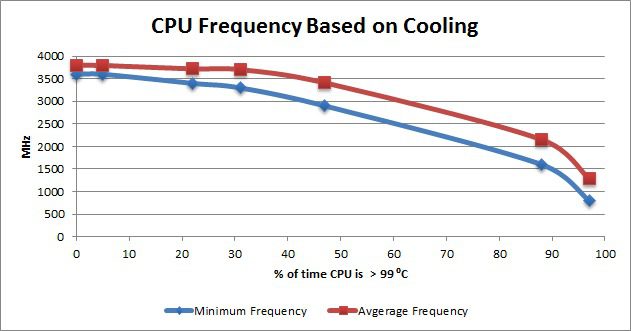
While we all know that modern processors need active cooling, there is actually very little official information on how temperature affects a CPU’s performance. Do you really need a high-end liquid cooled setup to get peak performance, or is the little stock cooler that comes with most CPUs enough? In this article we will examine exactly how temperature affects CPU performance.
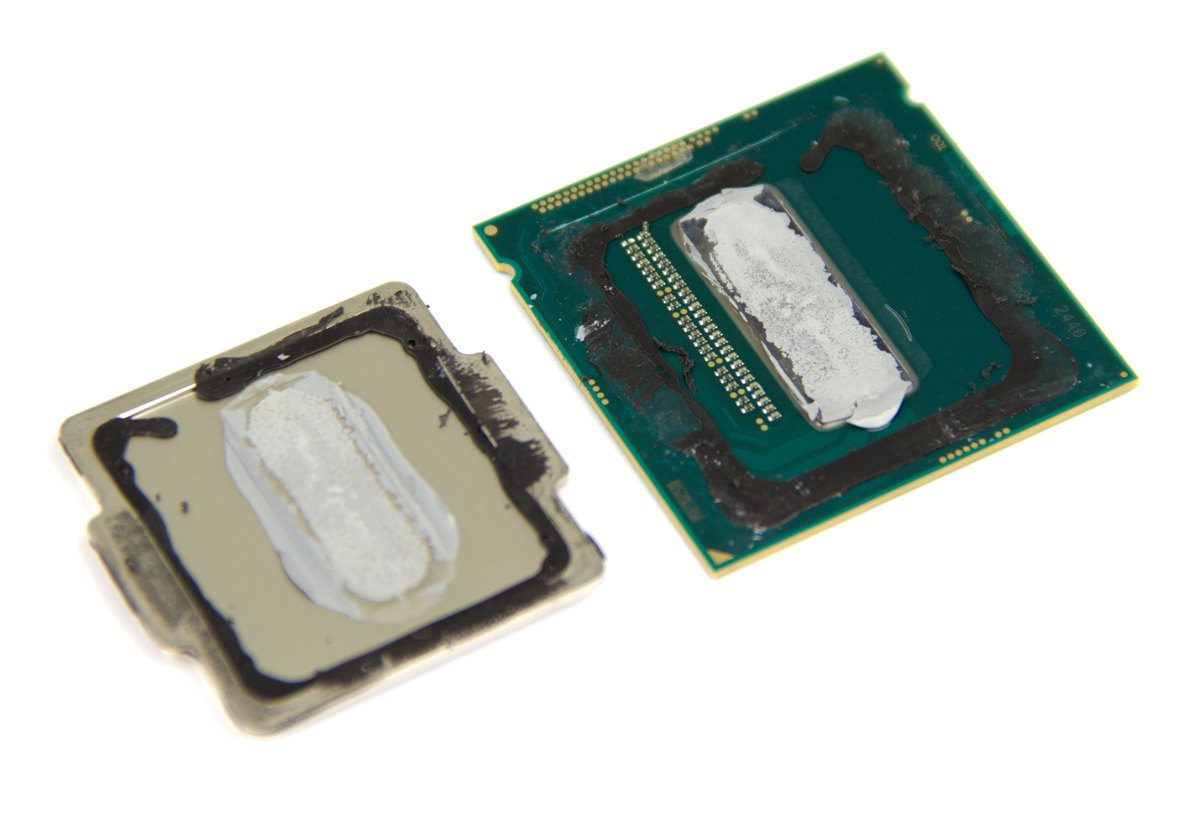
When the new Haswell K-series processors were still under NDA, there was a rumor that Intel was going to be moving back to soldering the CPU die to the heat transfer plate instead of using a TIM (thermal interface material). This rumor has been pretty well busted since we now know that these CPUs use what Intel is calling NGPTIM, or Next-Generation Polymer Thermal Interface Material.
The Z97 and H97 chipset have recently been added to Intel’s line of chipsets, replacing the previous Z87 and H87 chipsets. In this article we will take a look at the specifications for the Z97 and H97 chipsets to see what differences there are between them.
Puget Systems builds custom workstations, servers and storage solutions tailored for your work.
We provide:
Extensive performance testing
making you more productive and giving better value for your money
Reliable computers
with fewer crashes means more time working & less time waiting
Support that understands
your complex workflows and can get you back up & running ASAP
A proven track record
as shown by our case studies and customer testimonials