Photoshop CPU Roundup: AMD Ryzen 3rd Gen, AMD Threadripper 2, Intel 9th Gen, Intel X-series
AMD’s new Ryzen 3rd generation processors have arrived and shaken up the dynamic between Intel and AMD in many workloads. But how well do they handle heavy Photoshop workloads compared to the AMD Threadripper, Intel 9th Gen, and Intel X-series CPUs?
NVIDIA Docker2 with OpenGL and X Display Output
Docker is a great Workstation tool. It is mostly used for command-line application or servers but, … What if you want to run an application in a container, AND, use an X Window GUI with it? What if you are doing development work with CUDA and are including OpenGL graphic visualization along with it? You CAN do that!
First Look at AMD Ryzen 3rd Gen CPUs for Video Editing
AMD’s new Ryzen 3rd generation CPUs just launched with terrific performance improvements across the board. While we don’t have the full lineup tested just yet, we wanted to give a first look at what we are seeing in Premiere Pro, After Effects, DaVinci Resolve, and other applications commonly used in video editing.
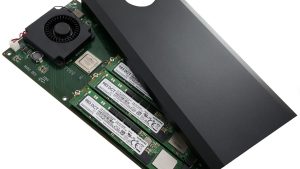
NVMe RAID 0 Performance in Windows 10 Pro
As SSDs have gotten faster, especially with the advent of NVMe technology, the vast majority of users don’t need to worry about RAID 0. However, there are still some niche applications where combining the speed of multiple, very fast SSDs is helpful – so in this article we are going to look at the current state of NVMe RAID solutions on a variety of modern platforms from Intel and AMD.

Does RAM Capacity Affect RealityCapture Performance?
RealityCapture, like other photogrammetry applications, is built to take a batch of photographs and turn them into digital, 3D models. The algorithms used during that process are designed to be “out of core”, meaning that not all of the data has to be loaded into system memory (RAM) at the same time – allowing for full processing without requiring a ton of available memory. Having more RAM can still be beneficial, though, so we decided to test how much impact it has on performance.
Install TensorFlow 2 beta1 (GPU) on Windows 10 and Linux with Anaconda Python (no CUDA install needed)
TensorFlow 2.0.0-beta1 is available now and ready for testing. What if you want to try it but don’t want to mess with doing an NVIDIA CUDA install on your system. The official TensorFlow install documentations has you do that, but it’s really not necessary.

Pix4D 4.3 vs 4.4 Performance Differences
Pix4D is an advanced photogrammetry application, suited to a wide range of uses, with a focus on handling images captured by drone cameras. Processing of those images into point clouds and 3D meshes/textures is time-consuming, heavily using a computer’s CPU and GPU. We have recently updated our benchmark tools for Pix4D, and published articles looking at CPU and GPU performance on version 4.3 – but in the midst of our testing, 4.4 was released. Is it any faster?

Pix4D 4.3: NVIDIA GeForce and Titan Performance Comparison
Pix4D is an advanced photogrammetry application, suited to a wide range of uses, with a focus on handling images captured by drone cameras. Processing of those images into point clouds and 3D meshes/textures is time-consuming, heavily using a computer’s CPU and GPU. We have recently updated our benchmark tools for Pix4D, and now are taking a look at how different NVIDIA video cards perform in this program.
How To Use SSH Client and Server on Windows 10
This post is a setup guide and introduction to ssh client and server on Windows 10. Microsoft has a native OpenSSH client AND server on Windows. They are standard (and in stable versions) on Windows 10 since the 1809 “October Update”. This guide should helpful to both Windows and Linux users who want better interoperability.

Case Study with Predictive Engineering
Clients approach Predictive Engineering with a design for a product which can range from satellites to submarines. We worked with them to create a workstation with enough power to handle their diverse workflow.