Windows is automatically removing some previously installed updates in the event of an update failure.
Windows is automatically removing some previously installed updates in the event of an update failure.
OctaneRender is a GPU-based rendering engine, utilizing the CUDA programming language on NVIDIA-based graphics cards. The upcoming 2019 version is adding support for the dedicated ray-tracing hardware in NVIDIA’s RTX series of video cards, and a preview of the OctaneBench tool was released recently to show a sneak peek at what we can expect from this technology. We rounded up the whole GeForce RTX card line – along with the Titan RTX – to see how they compare to each other and how much of a boost RTX tech can provide.
OctaneRender is a GPU-based rendering engine, utilizing the CUDA programming language on NVIDIA-based graphics cards. The upcoming 2019 version is adding support for the dedicated ray-tracing hardware in NVIDIA’s RTX series of video cards, and a preview of the OctaneBench tool was released recently to show a sneak peek at what we can expect from this technology. We rounded up the whole Quadro RTX card line – along with the Titan RTX – to see how they compare to each other and how much of a boost RTX tech can provide.

I have updated my TensorFlow performance testing. This post contains up-to-date versions of all of my testing software and includes results for 1 to 4 RTX and GTX GPU’s. It gives a good comparative overview of most of the GPU’s that are useful in a workstation intended for machine learning and AI development work.

In 2019, our continued goal is to get out there where our customers are to learn more about them, learn more about their workflow. What better place than the National Association of Broadcasters? NAB is the ultimate event for media, entertainment and technology professionals looking for new and innovative ways to create, manage, and deliver on any platform.

In this video, School of Motion teamed up with Puget Systems and Adobe to develop the ultimate After Effects computer. School of Motion wanted to tackle this subject, but instead of simply figuring out a way to make After Effects run faster the team pondered a far more interesting question, can we build the worlds fastest After Effects computer?
We’re partnering up with School of Motion to give away a beast of an After Effects workstations.
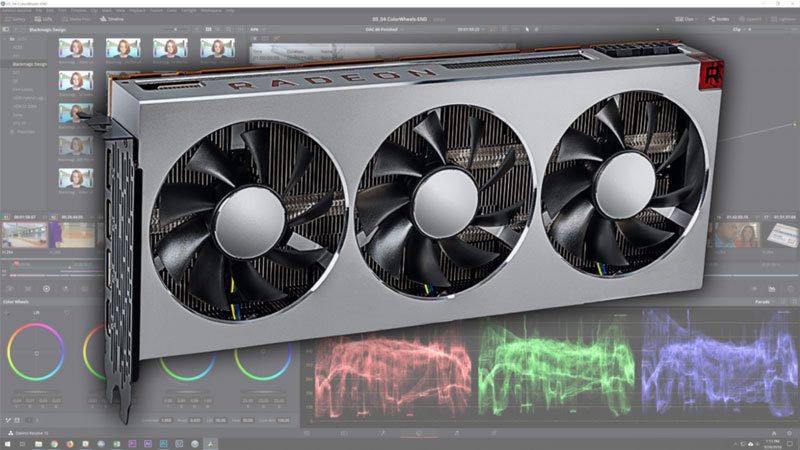
The Radeon VII is a very interesting card for DaVinci Resolve due to its 16GB of VRAM which is twice what you would get from a similarly priced NVIDIA GPU. But is it able to keep up in terms of raw performance?
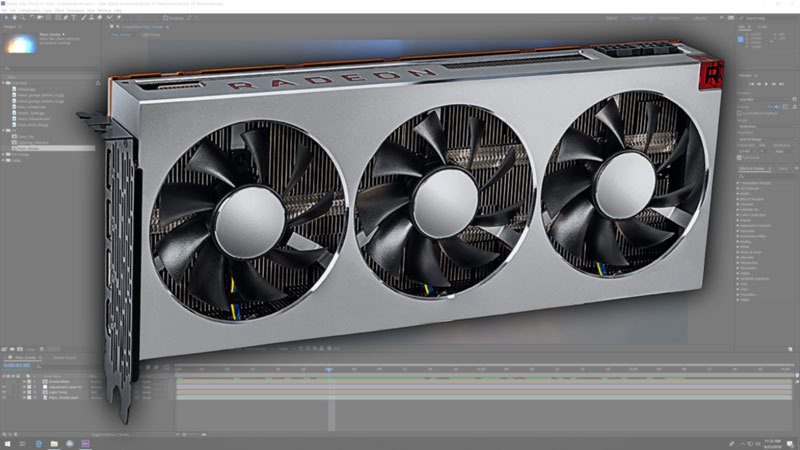
While After Effects is starting to utilize the GPU more and more, it currently is almost always limited by the performance of your CPU. So while AMD’s Radeon VII is an extremely robust card with twice the VRAM as a comparably priced NVIDIA GeForce card, will Ae actually be able to take advantage of its power?
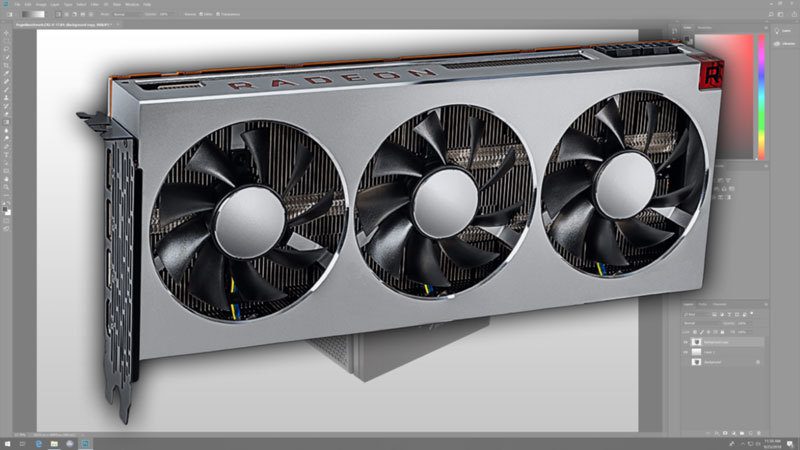
AMD’s Radeon VII is an extremely robust card on paper, having twice the VRAM as a comparably priced NVIDIA GeForce card. However, while 16GB of video memory is nice, it is rarely required for Photoshop. Does the Radeon VII have a performance advantage in Photoshop as well, or is going with NVIDIA still a better option?
Puget Systems builds custom workstations, servers and storage solutions tailored for your work.
We provide:
Extensive performance testing
making you more productive and giving better value for your money
Reliable computers
with fewer crashes means more time working & less time waiting
Support that understands
your complex workflows and can get you back up & running ASAP
A proven track record
as shown by our case studies and customer testimonials