Tensor-cores are one of the compelling new features of the NVIDIA Volta architecture. In this post I discuss the some thought on mixed precision and FP16 related to Tensor-cores. I have some performance results for large convolution neural network training that makes a good argument for trying to use them. Performance looks very good.


Agisoft PhotoScan 1.4.1 – Testing Introduction
PhotoScan is a photogrammetry program: an application that takes a set of images and combines them to create a 3D model. A combination of CPU and GPU processing is used in this process. It has been a couple years (and several version updates) since we last tested PhotoScan, so we are revisiting it to see what has changed and how it performs on modern computer hardware.

Photoshop CC 2018 NVIDIA GeForce GPU Performance
Adobe has been leveraging the power of the GPU in their software more and more, but is there any reason to spend money on an expensive video card for Photoshop?

After Effects CC 2018 CPU Comparison: AMD Ryzen 2 vs Intel 8th Gen
Intel has long been the performance king for After Effects, but AMDs new 2nd generation Ryzen CPUs have shown some great performance gains. Is it enough to let AMD overtake Intel?

Photoshop CC 2018 CPU Performance: AMD Ryzen 2 vs Intel 8th Gen
AMD has made great improvements with the new 2nd generation Ryzen CPUs that really closes the gap between AMD and Intel for Photoshop users. But is it enough to put them above Intel’s 8th Gen CPUs?

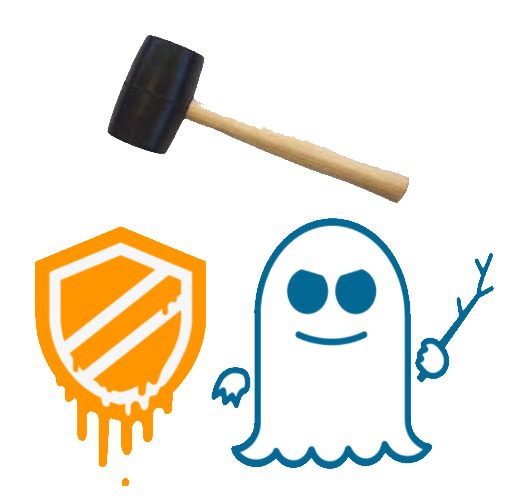
Intel Microcode Breach- Meltdown and Spectre Solutions Identified
In this article we will revisit the at-first frightening exposure of the security breach caused from the Intel Microcode breach possibility. We will review what the breach is, what solutions we use at Puget to protect our systems, and offer assistance finding your microcode patch.
Build TensorFlow-GPU with CUDA 9.1 MKL and Anaconda Python 3.6 using a Docker Container
Building TensorFlow from source is challenging but the end result can be a version tailored to your needs. This post will provide step-by-step instructions for building TensorFlow 1.7 linked with Anaconda3 Python, CUDA 9.1, cuDNN7.1, and Intel MKL-ML. I do the build in a docker container and show how the container is generated from a Dockerfile.

Case Study with Safariland
Safariland is a designer and manufacturer of equipment for sporting, military, law enforcement, investigation and public safety personnel., specifically gun holsters. The engineering team uses a certified Puget Systems workstation to conceptualize and produce prototypes.
Build TensorFlow-CPU with MKL and Anaconda Python 3.6 using a Docker Container
In this post I go through how to use Docker to create a container with all of the libraries and tools needed to compile TensorFlow 1.7. The build will include links to Intel MKL-ML (Intel’s math kernel library plus extensions for Machine Learning) and optimizations for AVX512.

How to Use Cinebench to Predict Cinema 4D Performance
Here at Puget Systems, it is our goal to perform realistic testing on the software packages we tailor our workstations toward. Sometimes this is easy, sometimes it is harder… and sometimes a software maker already provides their own benchmark tool. That is the case with Maxon, makers of Cinema 4D, as well as the free benchmark, took Cinebench. To determine whether we should use it, though, we have to ask some questions. Is Cinebench really a good benchmark for Cinema 4D? How do the tests it runs relate to real-world performance?