This post will be mostly Python code with implementation and examples of the Logistic Regression theory we have been discussing in the last few posts. Examples include fitting to 2 feature data using an arbitrary order multinomial model and a simple 2 class image classification problem using the MNIST digits data.

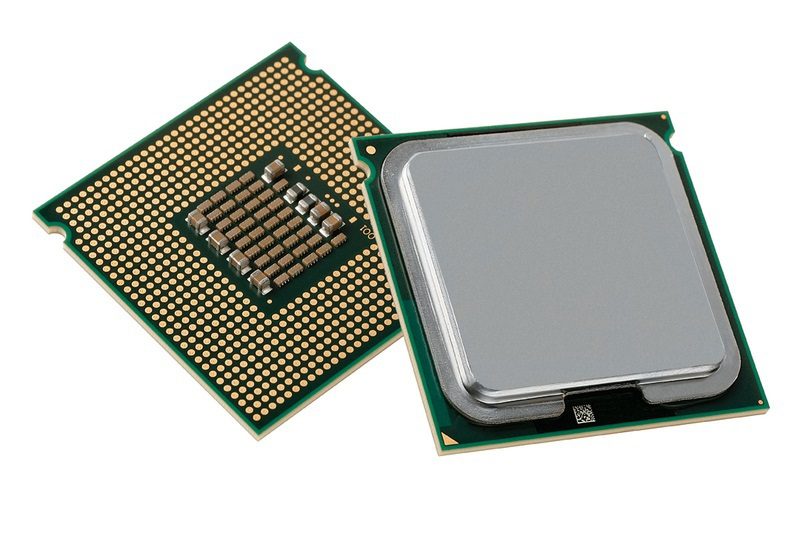
Stop Directly Comparing CPU Specs
Every time a new generation of CPUs is announced, I see a number of people writing about how they think it will be faster (or slower) than current technology because of the advertised specifications. CPU specs alone don’t tell the whole story, though, and comparing core count and clock speed across different brands or generations of processors is extremely misleading. Stop doing it!

Windows Update Fix: Gigabyte X99 + Intel Chipset
Having issues with updating to Windows Update 1703? Are you on a Gigabyte X99 Motherboard? Try this workaround.
Dear Bitplane and Imaris Users
Due to the extraordinary amount of time and effort that goes into one of our Recommended Systems we will no longer be able to maintain and update our Recommended System for Imaris.
Machine Learning and Data Science: Logistic Regression Implementation
In this post I’ll discuss evaluating the “goodness of fit” for a Logistic Regression model and do an implementation of the formulas in Python using numpy. We’ll look at an example to check the validity of the code.
Tesla Builds More Than a Supercharger
I got in line at the Starbucks’ drive-thru yesterday for my iced caramel macciato. While waiting, I noticed a familiar scene play out. This is a scene I’ve watched dozens of times since Tesla placed a Supercharger station in the Starbuck’s parking lot:
Tesla owners chatting with each other.

ReMake GeForce GPU Comparison
An analysis of NVIDIA GeForce GPU (video card) performance in Autodesk ReMake, including a look at graphics memory usage and dual GPUs.

ReMake Quadro GPU Comparison
An analysis of NVIDIA Quadro GPU (video card) performance in Autodesk ReMake, including a look at graphics memory usage and dual GPUs.

ANSYS Mechanical – Balancing Performance and Licensing Costs
We test a lot of software here at Puget Systems, and in most cases what we are looking for is what hardware lets a given program run the fastest – or in some cases, what is the most cost effective. If you can get 95% of the best possible performance for half the price that it would cost to get a full 100%, for example, that is often a compelling way to go. However, ANSYS Mechanical (and FLUENT) present a different challenge: how can you get the best performance within the limitations of the ANSYS licensing model?
Machine Learning and Data Science: Logistic and Linear Regression Regularization
In this post I will look at “Regularization” in order to address an important problem that is common with implementations, namely over-fitting. We’ll go through for logistic regression and linear regression. After getting the equations for regularization worked out we’ll look at an example in Python showing how this can be used for a badly over-fit linear regression model.