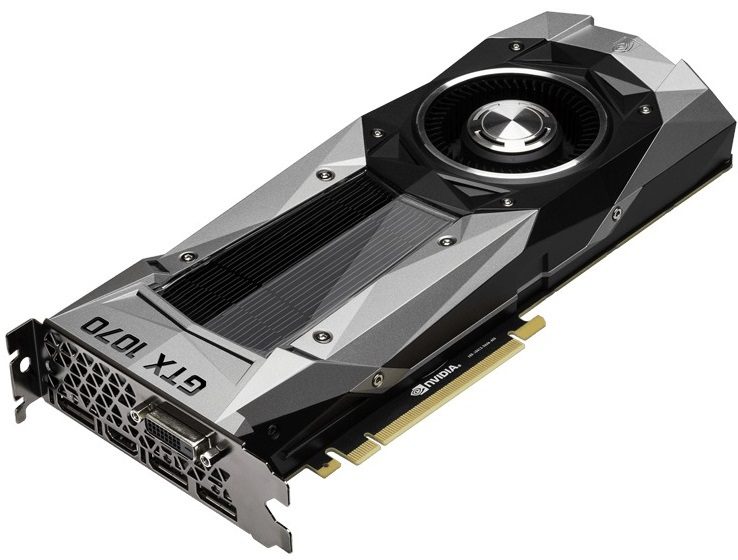
As of version 3.08, the Volta GPU architecture is now supported in OctaneRender. How does it stack up compared to other Titan and GeForce series graphics cards – in terms of both performance and value?


As of version 3.08, the Volta GPU architecture is now supported in OctaneRender. How does it stack up compared to other Titan and GeForce series graphics cards – in terms of both performance and value?

PhotoScan makes heavy use of both the central processors (CPUs) in a computer and the video cards (GPUs) to run many of the calculations involved in turning still images into a 3D model or map. Intel’s new Xeon Scalable processors offer configurations with dozens of CPU cores, as well as the ability to support multiple GPUs – so let’s see how they perform in PhotoScan.

PhotoScan makes use of both the CPU and GPUs (video cards) in a computer, during different steps of the photogrammetry workflow. One of the configuration options within this program also allows the CPU to be utilized during steps that are primarily performed on the GPU – and it is enabled by default. However, we have found in our testing that this option usually hampers performance more than it helps!

PhotoScan makes use of the video cards in a computer to assist with the computation of certain steps. As such, both the model of video card used and the number of GPUs present in a system can have an impact on the amount of time those steps take. In this article, we take a look at how multiple GeForce GTX 1080 Ti cards scale in performance across a few different CPU platforms.

PhotoScan makes use of the video cards in a computer to assist with the computation of certain steps. As such, the model of video card used can have an impact on the amount of time those steps take. In this article, we take a look at the GeForce 1000-series – based on NVIDIA’s Pascal GPU architecture – to see how they compare to each other.

Following up on our previous article about SOLIDWORKS 2018 GPU performance, we have been provided with an extremely complex assembly that finally shows some performance difference between low- and high-end video cards within the same family. Armed with this 4372 part, 40.9 million triangle model we ran through testing on multiple Quadro and Radeon Pro graphics cards to see how they handle such a monstrously large project.

Blackmagic’s DaVinci Resolve is known for how well it utilizes multiple GPUs to improve performance, but is this still true with cards like the new NVIDIA Titan V? And do you really need a Xeon or Dual Xeon setup to get the best performance possible?

Despite how popular SOLIDWORKS is, there is a lot of outdated and simply inaccurate information on the web regarding what video card you should use. For this article I tested multiple graphics cards from the Quadro, GeForce, and Radeon Pro families at both 1080p and 4K resolutions – and quickly found that either things are now a lot simpler than in my past experience, or else something is no longer up to snuff regarding how we have tested SOLIDWORKS GPU performance in the past.

If your workflow depends on having 10-bit color support on your primary display, using a workstation graphics card is typically the only way to do so since most consumer cards do not support displaying 10-bit color. But do you really need a Quadro P6000 or can you use a much less expensive card like the Quadro P4000 or Radeon Pro WX 9100 without sacrificing very much performance?

The NVIDIA Titan V has many the features that are not useful in DaVinci Resolve, but it’s raw power allows it to give the highest single GPU playback performance of any GPU we have every tested.