Not Just for Gaming: NVIDIA GeForce RTX Will Improve Workflows

NVIDIAs new GeForce RTX video cards have been all the talk lately. There is a lot of debate on the value that real time ray tracing brings to games, and some questions on how useful these cards will be to traditional ray traced renderers. With these cards becoming available for testing, and reviews starting to come in, many of these questions will be answered. However, there is an aspect to these cards that is often being overlooked: how the advances in real time ray tracing will dramatically cut down on production time before the rendering stage.

2nd Gen AMD Ryzen Supported RAM Speeds

Just like the original Ryzen CPUs, the 2nd Gen Ryzen processors from AMD support a range of different RAM speeds depending on a number of factors. This information is not easily accessible to the public, however, so we decided to put together a quick post with the information we received from our contacts at AMD.

How to Use Cinebench to Predict Cinema 4D Performance

Here at Puget Systems, it is our goal to perform realistic testing on the software packages we tailor our workstations toward. Sometimes this is easy, sometimes it is harder… and sometimes a software maker already provides their own benchmark tool. That is the case with Maxon, makers of Cinema 4D, as well as the free benchmark, took Cinebench. To determine whether we should use it, though, we have to ask some questions. Is Cinebench really a good benchmark for Cinema 4D? How do the tests it runs relate to real-world performance?

The thin line between stress testing and hardware abuse

As a part of our testing, we want to cause hardware to fail if it is close to doing so. However, stress testing for an excessive amount of time could potentially shorten the lifespan of the system. Is there a line where hardware testing becomes hardware abuse?

Pix4D Cloud vs Local Processing

Pix4D is a photogrammetry application which can take sets of photographs and turn them into point clouds and 3D meshes, to make digital versions of real-world objects or locations. It supports both local processing on a workstation as well as uploading images to be processed in the cloud – but which is faster, and what advantages does each have?

A quick look at Titan V rendering performance

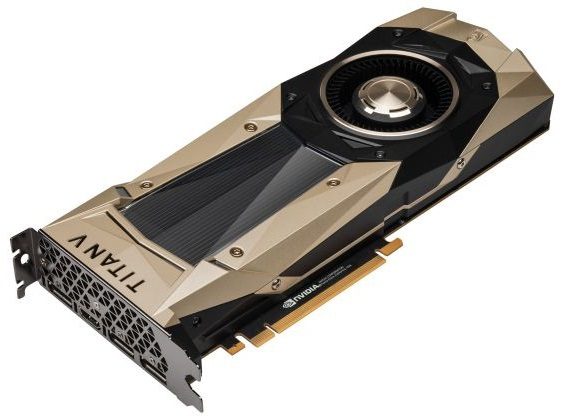
The latest in the Titan line is here, bringing along with it a very hefty price tag. We just got our first cards in and while we will be doing more in-depth testing in the near future, we wanted to take a look at some preliminary GPU-based rendering results.

NVIDIA Titan V Surprise

NVIDIA’s CEO, Jen-Hsun Huang, dropped a bit of a bombshell at the NIPS conference yesterday: the launch – and immediate availability – of the next graphics card in NVIDIA’s Titan series. It is called the Titan V, with V referring to the new Volta architecture it is based on. So what can we expect from the latest entry in the Titan lineup?