This article will guide you through the process of replacing the GPU (video card) in the Fractal Define R5. This article has an instruction break down along with a full video produced by Chris Shreve.

This article will guide you through the process of replacing the GPU (video card) in the Fractal Define R5. This article has an instruction break down along with a full video produced by Chris Shreve.
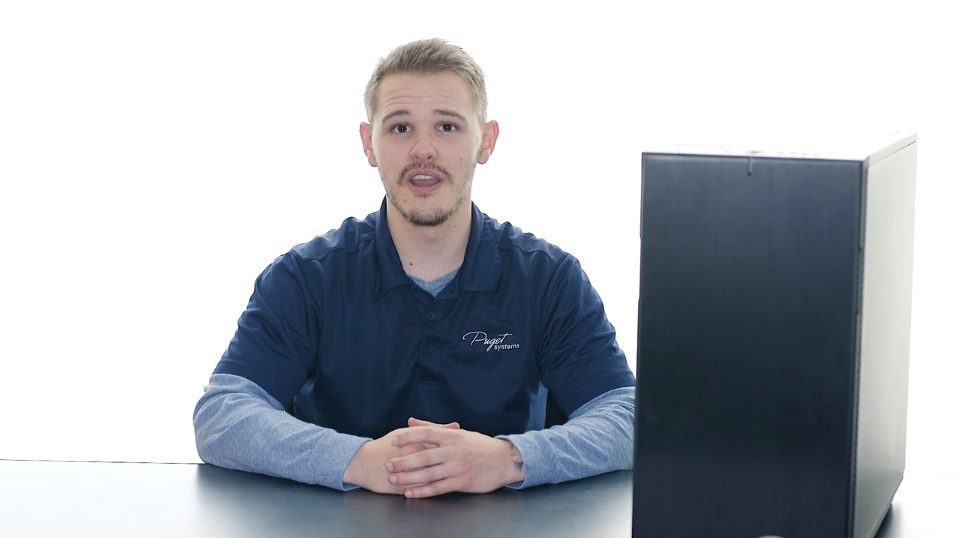
This article will guide you through the process of replacing the Front Panel in the Fractal Define R5. This article has an instruction break down along with a full video produced by Chris Shreve.

Intel launched a new processor in their Core X series recently, and it is novel in many ways. It combines a fairly high core count with very high clock speeds, at the cost of power consumption and high heat output. It also is very limited in availability, being offered only to select system integrators via a private auction. We got our hands on one in the first auction, and have been putting it through several rounds of benchmarking to see if it is worth the price and hassle, as well as to determine if we will be offering it in our workstations.

Pix4D is an advanced photogrammetry application, suited to a wide range of uses, with a focus on handling images captured by drone cameras. Processing of those images into point clouds and 3D meshes/textures is time-consuming, heavily using a computer’s CPU and GPU. Both core count and clock speed play a role in Pix4D performance, so when Intel released their new Core i9 9990XE with very high clock speeds and a respectable number of cores (14, plus Hyperthreading) this seemed like a good application to test on it.

One benefit that computers and the internet have brought to us is that they have made it easier than ever before to be creators.

Dassault Systemes launched the initial version of SOLIDWORKS 2019 late last year, but with the recent release of SP1 we expect that customers will soon be using it in production environments. In preparation for that, we have tested the field of current Intel Core series processors to see how they compare across a wide variety of tasks within SOLIDWORKS.
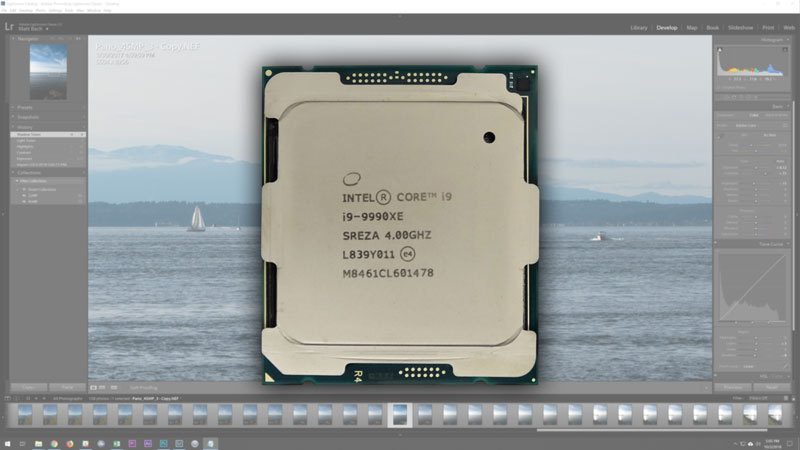
The Intel Core i9 9990XE 14-core CPU is a special, OEM-only, no warranty processor that is only available to select system manufacturers like Puget Systems. While it is very hard to get, it has terrific performance for both lightly-threaded and highly-threaded tasks making it one of the fastest CPUs currently available.
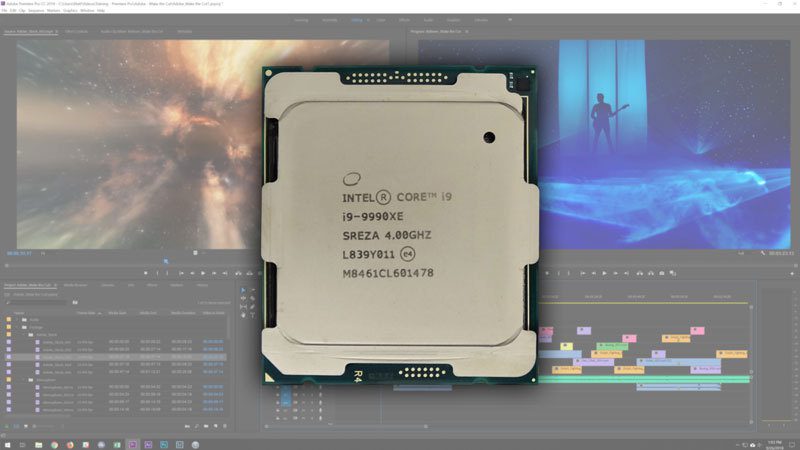
The Intel Core i9 9990XE 14-core CPU is a special, OEM-only, no warranty processor that is only available to select system manufacturers like Puget Systems. This unique processor is able to run at 5.0 GHz even when all the cores are being used which should make it among the fastest processors currently available for Premiere Pro.
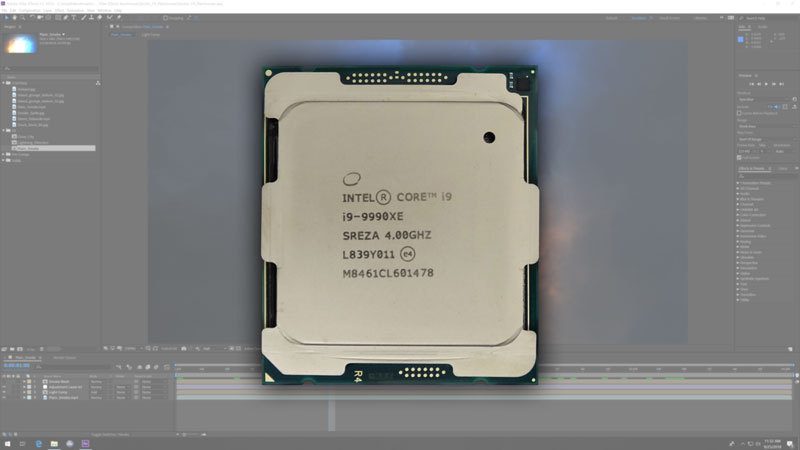
The Intel Core i9 9990XE 14-core CPU is a special, OEM-only, no warranty processor that is only available to select system manufacturers like Puget Systems. While it is very hard to get, it should actually be among the fastest CPUs to use for After Effects as it has terrific performance for both lightly-threaded and highly-threaded tasks.
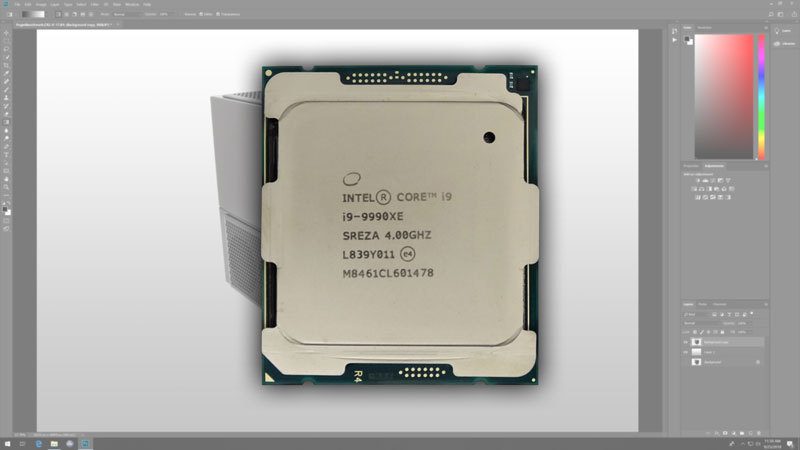
The Intel Core i9 9990XE 14-core CPU is a special, OEM-only, no warranty processor that is only available to select system manufacturers like Puget Systems. While Photoshop typically does not take advantage of higher core count CPUs, the unique thing about this processor is that it is can run at up to 5.1 GHz which should allow it to give terrific performance in Adobe Photoshop CC.
Puget Systems builds custom workstations, servers and storage solutions tailored for your work.
We provide:
Extensive performance testing
making you more productive and giving better value for your money
Reliable computers
with fewer crashes means more time working & less time waiting
Support that understands
your complex workflows and can get you back up & running ASAP
A proven track record
as shown by our case studies and customer testimonials