In a new series of short articles we will be looking at the best computer system specs for a variety of popular applications, starting with OctaneRender by OTOY.

In a new series of short articles we will be looking at the best computer system specs for a variety of popular applications, starting with OctaneRender by OTOY.

With the recent release of SOLIDWORKS 2020’s first service pack, as well as multiple new CPU launches from Intel and AMD in the past few months, we thought it would be a good time to do a roundup of processor performance in modeling, rendering, and simulations within SOLIDWORKS.
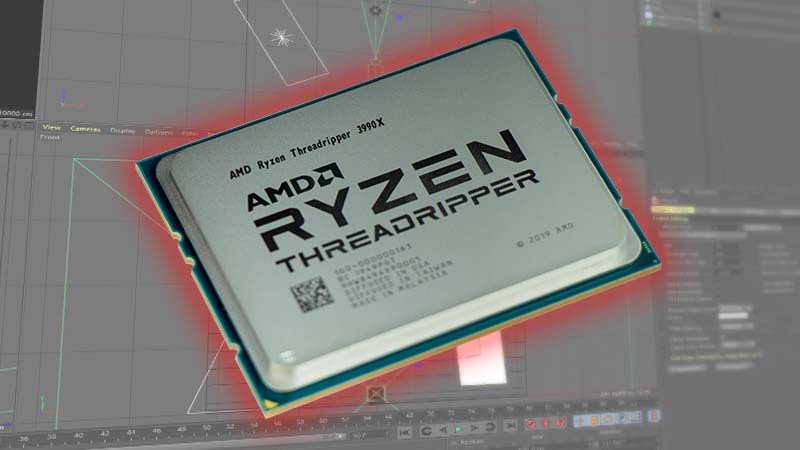
When AMD launched the 64-core Threadripper 3990X, some reviewers reported that performance of this 128-thread beast was hindered by running a normal version of Windows 10 Pro – and that using Windows 10 Pro for Workstations or Windows 10 Enterprise instead gave better results. We have investigated that claim using Cinebench and V-Ray benchmarks to see if the choice of operating system could impact our customers.
AMD has launched a new top-end CPU in their Threadripper product line, equipped with a whopping 64 cores. We are putting this new 3990X chip to the test in one of the applications where its high core count should shine: CPU based rendering with V-Ray. See how it stacks up to the other Threadripper models as well as Intel and AMD’s various other desktop processors.
AMD has launched a new top-end CPU in their Threadripper product line, equipped with a whopping 64 cores. We are putting this new 3990X chip to the test in one of the applications where its high core count should shine: CPU based rendering in Cinema 4D. See how it stacks up to the other Threadripper models as well as Intel and AMD’s various other desktop processors.

For CPU-based rendering engines, the processor is by far the most important hardware choice when building or buying a workstation. What is the best choice among all the new CPUs that were launched in 2019, though? We’ve tested a wide range of chips so that we can provide that answer to you, so read on to find out!

Intel and AMD have both launched new lines of high-end desktop processors, with different approaches to increasing value. AMD’s 3rd Gen Threadripper CPUs are based on a newer microarchitecture, bringing better performance for around the same price as previous models. Intel, on the other hand, focused on reducing price while still using the same underlying technology as their last series. We tested both to see which approach gives the best results for rendering in Cinema 4D.

Intel and AMD have both launched new lines of high-end desktop processors, with different approaches to increasing value. AMD’s 3rd Gen Threadripper CPUs are based on a newer microarchitecture, bringing better performance for around the same price as previous models. Intel, on the other hand, focused on reducing price while still using the same underlying technology as their last series. We tested both to see which approach gives the best results in the V-Ray Next renderer.

AMD’s Ryzen 3rd generation processors launched a few months ago, with both more cores and higher per-core performance than previous models in that series. Now AMD has released the top-end chip in this family, the Ryzen 9 3950X, with even more cores! In this article we will take a look at how it stacks up to a few other AMD and Intel processors in this application, focusing exclusively on rendering performance measured via Cinebench R20.

AMD’s Ryzen 3rd generation processors feature both an increase in core count and per-core performance over previous models, both of which directly improve rendering speeds in V-Ray Next. A few months after the initial launch, AMD has now released the Ryzen 9 3950X with even more cores! In this article we will take a look at how this chip handles V-Ray rendering, both in the pure CPU and GPU+CPU render pipelines.
Puget Systems builds custom workstations, servers and storage solutions tailored for your work.
We provide:
Extensive performance testing
making you more productive and giving better value for your money
Reliable computers
with fewer crashes means more time working & less time waiting
Support that understands
your complex workflows and can get you back up & running ASAP
A proven track record
as shown by our case studies and customer testimonials