The Customer
One of the things we are known for here at Puget Systems is our extensive hardware testing. Our Performance Labs team is dedicated to understanding popular applications and benchmarking them on a wide range of modern hardware. However, there are a lot of programs out there – and a near-infinite number of possible workflow combinations. We don’t have infinite time or manpower, so we are usually limited to testing the most popular software. Being able to automate that testing is also critical, which can further limit which applications we are able to benchmark.
Sometimes, that means the data we have already gathered doesn’t provide what a customer needs in order to make a decision about the right system or specifications. We had one such instance recently, where a returning customer saw how much RAM prices have risen over the last year, and wanted to know if they really needed to populate all of the memory channels on future servers they plan to purchase.
The Challenge
AMD’s EPYC™ 9005 Series supports up to 12 memory channels per CPU, but this customer believed that their specific workload might not need all of that bandwidth. Their original purchases were already configured to use only half of those channels – six DDR5 RDIMMs – but they were hoping to trim down even further.
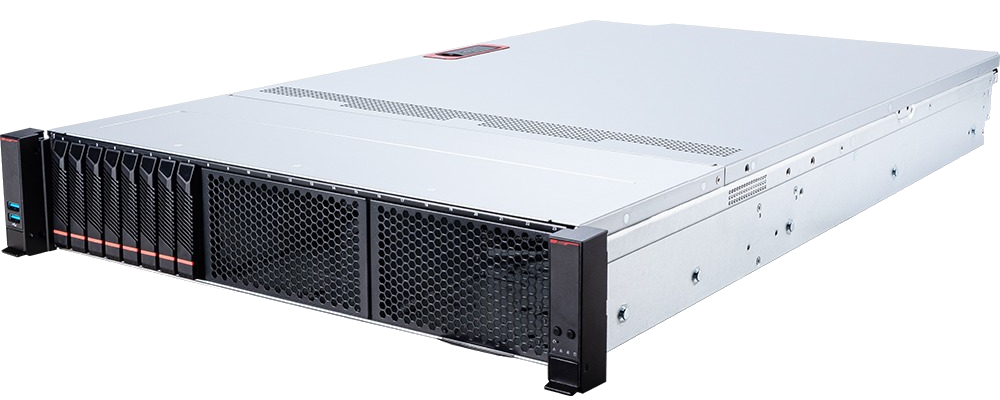
Memory has gotten expensive, and smaller modules have become particularly hard to source. So could they get away with 4 higher-capacity modules, or perhaps even just 2? This is the question they brought to our sales consultants.
We didn’t have any testing data comparing memory channel count on EPYC with this customer’s primary software, so our consultants took the question to our Labs team. Evan, one of our Labs technicians, offered to run some tests comparing 6, 4, and 2 modules in their target platform.
The Solution
Evan was able to turn around the testing pretty quickly, and relayed the results to our consultants for sharing with the customer. In one of their use cases, reducing from 6 to 4 modules only lowered performance by about 1%. Dropping further, to 2 sticks, cost ~4%. In another test case, the difference from 6 to 2 modules was a spread of about 10%.
Our customer was impressed by our ability to test for their specific situation. The information we provided will help them evaluate whether the cost savings from consolidating their memory configuration would be worth the small loss of performance. We look forward to seeing what they decide on their next order!
Conclusion
If you are looking for guidance on a new workstation or server, we have a whole host of recommended systems for various workflows. If what you do isn’t covered there, reach out to our no-pressure consultants and see how we can help. Maybe you’re a great candidate for our Labs Consulting Service, too!

Looking for a new workstation or server?
We build computers tailor-made for your workflow.

Don’t know where to start?
We can help!
Get in touch with one of our technical consultants today.