This is going to be an unusual blog post, because I’m going to try and talk you out of one of our most impressive (and expensive) products. This isn’t the sort of thing you’d normally see on a commercial website, but I guess we’re not your normal commercial blog either. Today I’m going to try and convince you that you don’t need a fully liquid cooled system.

Product Review: MSI FM2-A75IA-E53 Motherboard
AMD’s FM2 platform is a great choice when you want decent graphical performance but either do not have the space or do not want to spend the money on a discrete video card. Unfortunately, there are only two mini-ITX boards currently on the market: the ASRock FM2A75M-ITX and the MSI FM2-A75IA-E53. Today we will be looking at the MSI FM2-A75IA-E53 to determine if it is a board we would like to carry in our product line; specifically to update our Echo line of systems.

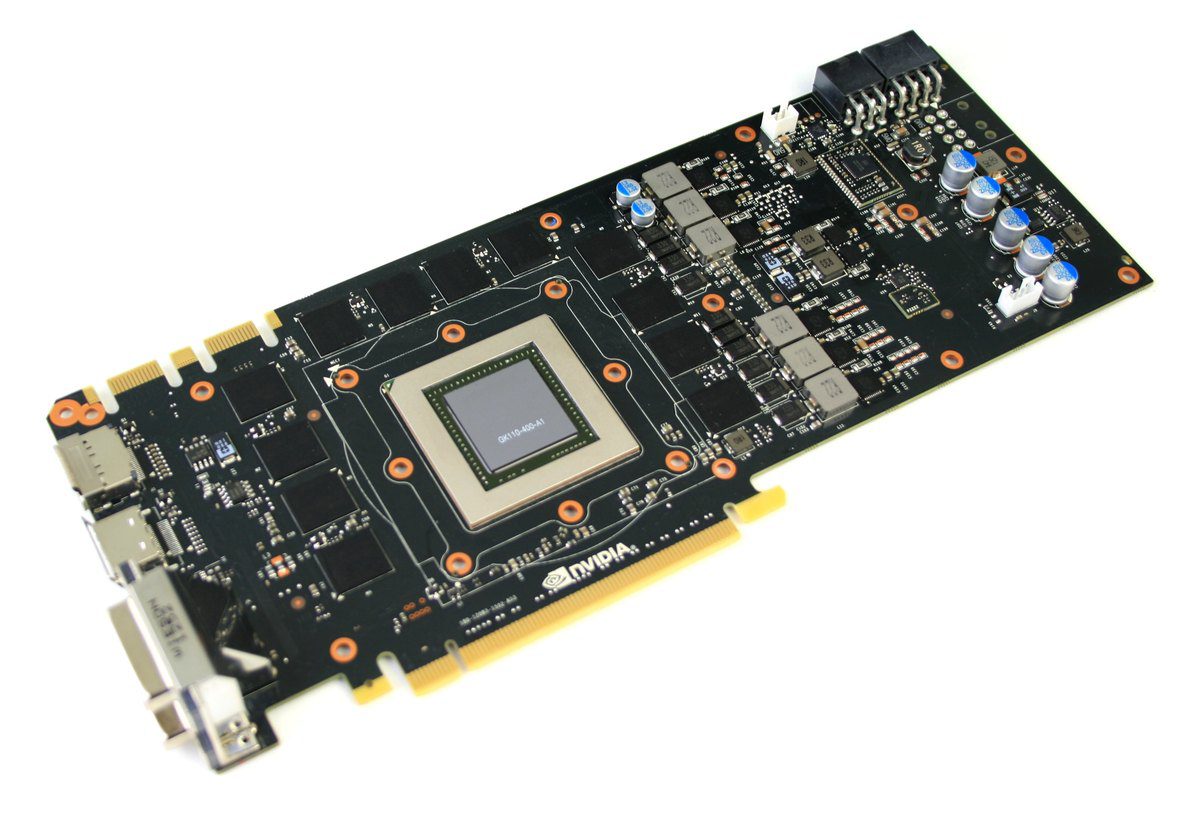
Review: NVIDIA Geforce GTX Titan 6GB
We normally do not publish reviews of video cards since review sites like Toms Hardware and Anandtech already do a great job reviewing these parts and any article we write would have very little to add. In the case of the NVIDIA Geforce GTX Titan, we were so impressed with its performance that we decided to go ahead and publish our own review for this card.

SATA 3Gb/s vs. 6Gb/s Cable Performance (Revisited)
Since the release of SATA 6GB/s, there has been some confusion regarding the necessity of using a specific SATA 6Gb/s cable for SATA 6Gb/s drives. We have addressed this in previous articles, but enough time has gone by that we wanted to take another look to see if anything has changed since we last examined the issue.

Moving Windows 7/8 Libraries
Libraries in Windows 7 and Windows 8 are a great way to organize your data, but sometimes you will want to change the default location for the libraries. There are two methods to do so, both of which we will show in this article.
3 Keys to a Great Custom Computer
We field A LOT of calls here from people wanting to spec out a custom PC. Their needs range from a list of specific parts to “give me a great computer”. Here to help at Puget Systems our consultants can work with any level of experience (or maybe not-so-experienced) to come up with a great Puget System. In the marketplace of custom computers you literally have thousands of choices. I know…it makes my head hurt thinking about it too. So, to start, we have done some narrowing down of the selection to a list of the very best parts available. See, it’s going to get better. Now, you can help us spec out a great custom system for you by considering three things…

Adobe Photoshop CS6 Memory Optimization
We at Puget Systems have always held the belief that a computer’s hardware should be specifically tailored to match what the computer will be used for in order to maximize its effectiveness. Different programs make use of hardware in different ways, and knowing how the program behaves is important to determine what pieces of hardware need to be more powerful, and which are not as critical. In this article we want to determine if the speed and configuration of RAM affects the performance of Photoshop CS6 and if so by how much.
The Top Video Cards (as determined by our customers)
When it comes to building a custom PC, one of the most important selections is the graphics card. What used to be viewed as a distinction, often limited to gaming systems is now a vital part of many computers ranging from post-production workstations to trading PCs requiring support for 8+ monitors.
Since the number of choices for graphics cards can be overwhelming, we cull through many brands and models until we find those which meet our performance and reliability standards. Only then do we offer specific brands and models for placement in a computer crafted by Puget Systems.
Solid State Drives Soar in Popularity
It wasn’t long ago that Solid State Drives (SSD) were considered a luxury item, reserved for those who demanded drive speeds only SSDs can deliver. The first generation of SSDs were not only limited in capacity (40 and 60 GB models were popular) but were very expensive, often costing more than $500. That makes for a difficult sell when a mechanical drive could be had for about half the the price and nearly 10x the capacity.
Starting in the first quarter of 2011, companies such as Intel, Corsair, Samsung and other began dropping prices on their SSDs. At Puget Systems we’ve found Intel to build a reliable and fast SSD at a reasonable price and have consolidated our offerings around their main lines.
#Fail
If you want to work at Puget Systems you have to be ready for things to work a bit differently than your last job. You see, here, we are obsessed about a few things and one of them is failure. Everything and everyone has every failure, ever, tracked in our database. Want to know what the failure rate is for a particular stick of RAM? We know it. Want to know how many times your favorite employee has forgotten to add the required build notes to an order? We document their every transgression. We fail things for even the most seemingly inconsequential reason, right down to the smallest scratch you might not have even noticed. Perfection matters. Every week, during our staff meetings, all of the logged failures from the previous week are listed for everyone to see and you get to share with everyone your epic fail.
Tough stuff for the Puget staff, huh?
Not really. Nobody is running around, ducking for cover, while avoiding the axe from Jon. Although that might make for an interesting game it’s not what we do all of this for…it’s for you.
“For what? My entertainment?” you might ask. Nope, for your future sanity.