Table of Contents
Introduction
Building a benchmark for Unreal Engine presents a unique challenge: unlike many professional applications that focus on a relatively narrow set of workflows, Unreal Engine is used across an enormous range of industries and production environments. A game developer building large open-world environments may stress hardware very differently than a virtual production studio rendering cinematic content in real time, even though both are using the same engine. Because of this, creating a meaningful benchmark requires more than simply measuring frame rates or relying on isolated synthetic tests.
For those unfamiliar with Puget Systems, part of what makes us unique is the amount of effort we put into making sure our workstations are properly optimized for the user’s workflow. That requires in-depth testing and performance analysis, which is supported in part by Puget Bench — our in-house developed performance testing suite. We have created benchmarks for Adobe Premiere, Photoshop, After Effects, and Lightroom Classic, as well as Blackmagic DaVinci Resolve, and are now turning our attention to Unreal Engine.
The upcoming Puget Bench for Unreal Engine is designed around real production workflows that developers, artists, and studios encounter throughout daily work in the engine. The focus is on producing results that are both representative and actionable — tests that reflect practical usage patterns while remaining consistent and repeatable across a broad range of modern hardware platforms, including consumer desktops, professional workstations, creator laptops, Apple systems, and emerging ARM-based devices.
While a real-world benchmark is never fully complete, the first release will represent the foundation of a much larger testing platform. Unreal Engine workflows continue to evolve rapidly, particularly with technologies like Nanite, Lumen, Niagara, Chaos, and virtual production pipelines becoming increasingly common. Our long-term goal is to continue expanding benchmark coverage so it remains representative of how Unreal Engine is used across modern production environments.
Benchmark Goals
Before determining what to test, it is important to define what we intend to accomplish with this benchmark. These core goals serve as the foundation for how Puget Bench for Unreal Engine is being designed, evaluated, and is going to be expanded over time.
Real-World Focus
A major priority for this benchmark is ensuring that its results correlate closely with actual production usage. Many traditional benchmarks rely heavily on synthetic workloads or narrowly-scoped tests that may highlight theoretical hardware limits without necessarily representing real-world performance accurately.
Instead, this benchmark will focus on practical workflows that users regularly encounter while developing, rendering, simulating, and iterating within Unreal Engine. The intent is to measure the experience of using the application itself, rather than isolated hardware behavior. When someone uses the benchmark, they should be able to relate it to their own workflows and see their own pain points reflected.
Repeatability
Consistency is critical for any meaningful benchmark. Tests must be designed to produce repeatable results across multiple runs and across different hardware platforms. While Unreal Engine workloads can naturally introduce some variability, our benchmark scenarios are being carefully constructed to minimize inconsistencies and provide reliable comparisons between systems.
This repeatability is especially important when evaluating hardware upgrades, comparing workstation configurations, or tracking performance changes across new hardware generations.
Actionable Results
Benchmark numbers are only useful if they help users make real decisions. One of the primary goals of Puget Bench for Unreal Engine is to provide data that can directly inform workstation purchases and hardware upgrades.
Different Unreal Engine workflows stress hardware differently. Some tasks are heavily CPU-bound, others depend primarily on GPU performance, while certain workflows place significant demands on storage or memory capacity. By testing a range of production scenarios, this benchmark will help identify which hardware configurations are best suited for specific types of work. Users should be able to look at the results and know exactly what they should do to improve their performance.
Broad Hardware Coverage
Work in Unreal Engine is no longer limited to traditional desktop workstations. Developers and creators increasingly rely on a wide range of hardware platforms, including mobile workstations, creator-focused laptops, Apple silicon systems, and professional high-core-count workstations.
Puget Bench for Unreal Engine is being designed to support this broad ecosystem, allowing meaningful comparisons across a diverse range of modern hardware configurations.
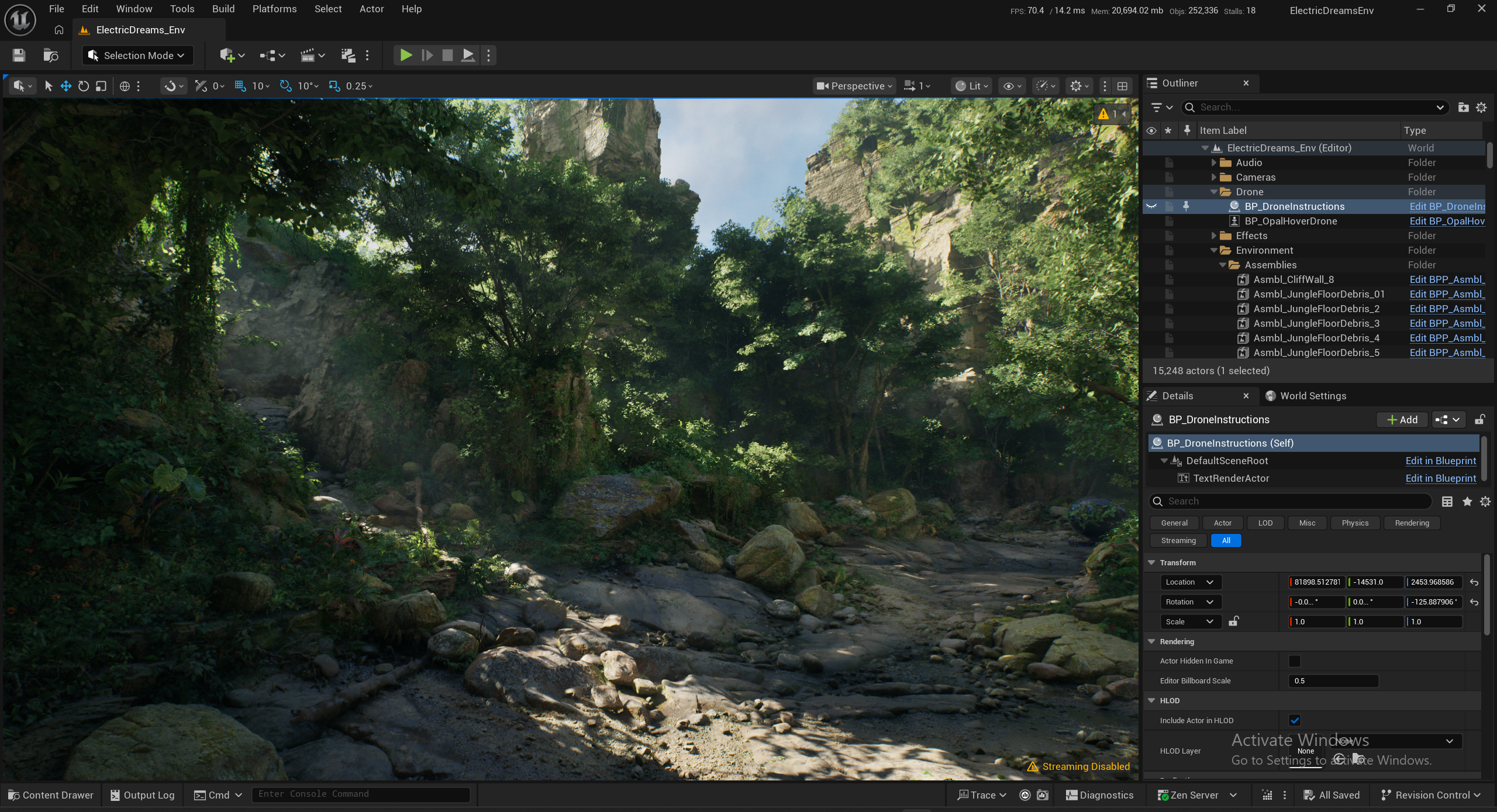
Image
Benchmark Components
Unreal Engine workflows span far beyond simple viewport rendering. To better reflect real production usage, we’ve planned for our benchmarks to include multiple workload categories that target different aspects of the engine.
While there can sometimes be limitations based on what can be automated for the purposes of a benchmark, we are working towards being able to test the following core aspects of Unreal Engine:
Shader Compilation
Shader compilation represents one of the most common CPU-intensive workloads in Unreal Engine. Opening a project for the first time, changing rendering features, or syncing new project files can trigger the compilation of thousands of shader permutations.
This workload heavily stresses CPU performance, storage responsiveness, and memory capacity, while also representing a real productivity bottleneck for many developers. Measuring shader compilation performance will provide insight into how quickly a system can move from project launch to active development.
Project Open Times
Project and level load times are an important part of day-to-day usability within Unreal Engine. Developers frequently move between environments, test maps, and production scenes throughout their daily workflow.
This portion of the benchmark will evaluate how quickly systems can load large Unreal Engine projects once shaders have already been compiled. Performance here will reflect a combination of storage throughput, CPU responsiveness, and memory performance, all of which contribute to the overall responsiveness during the development experience.
Viewport Performance
Real-time viewport performance remains one of the most important aspects of working within Unreal Engine. Our benchmark is planned to evaluate viewport responsiveness across a variety of production-like scenarios, including complex lighting, Niagara particle systems, Chaos simulations, and dense geometry.
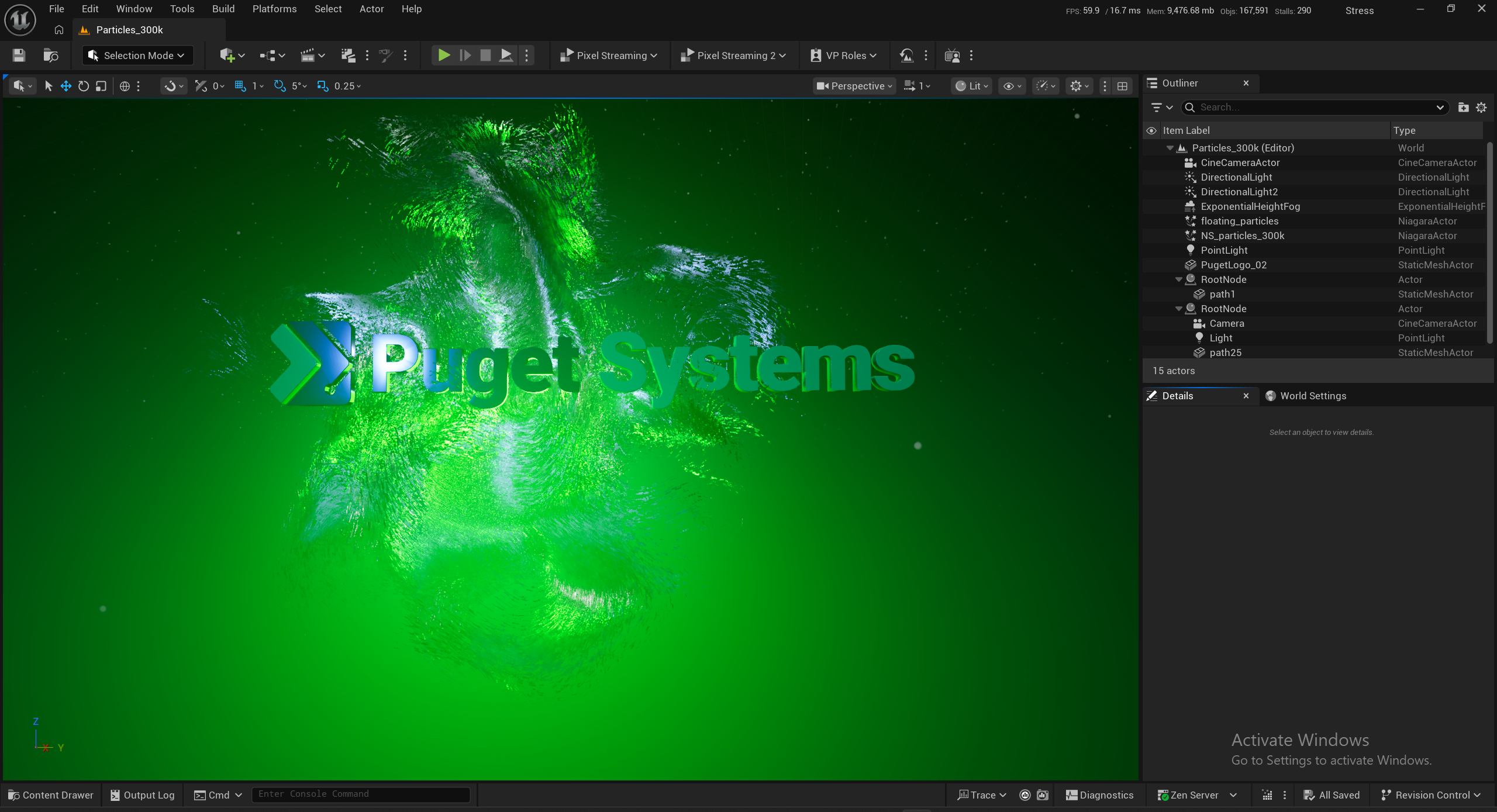
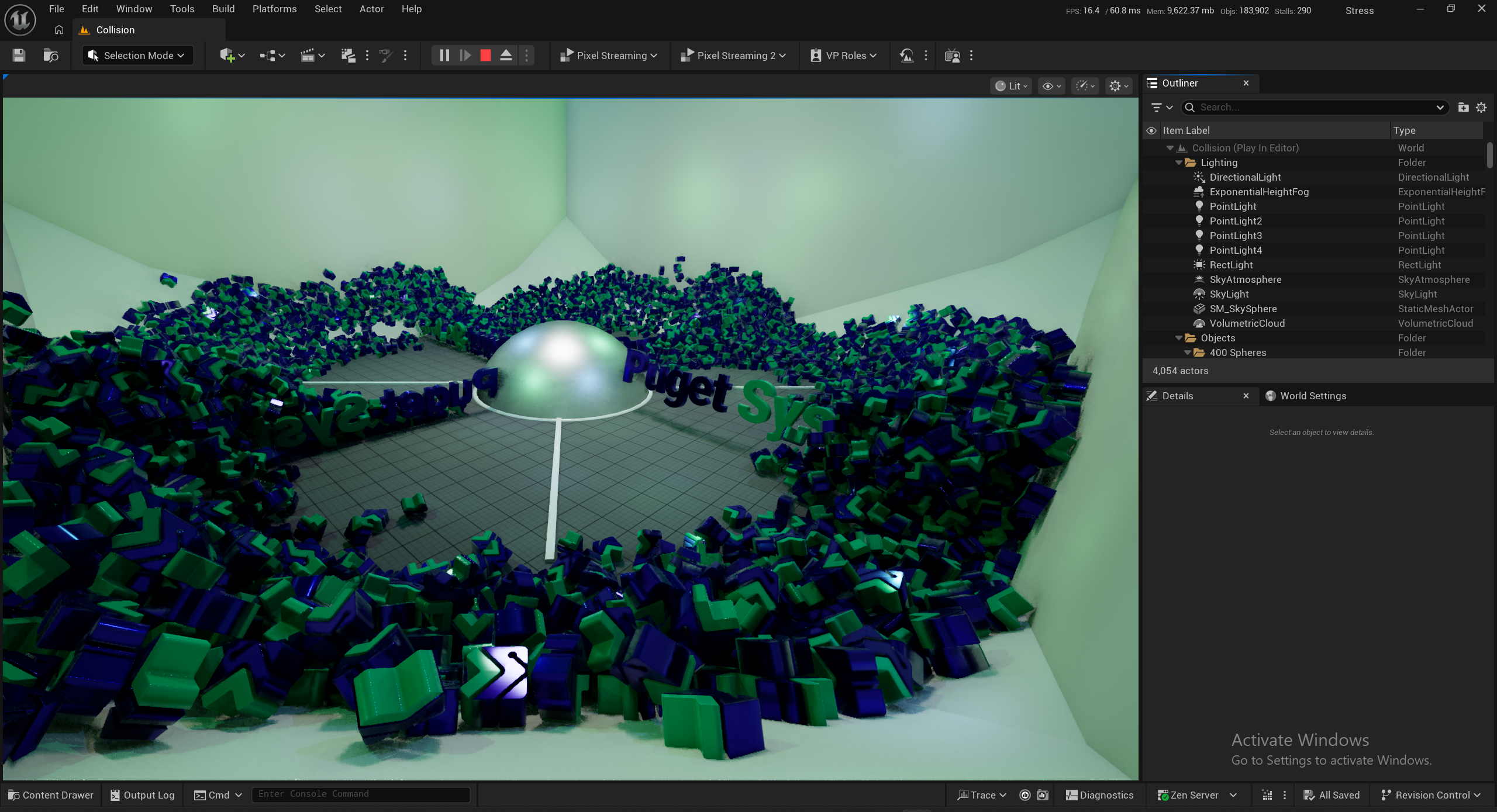
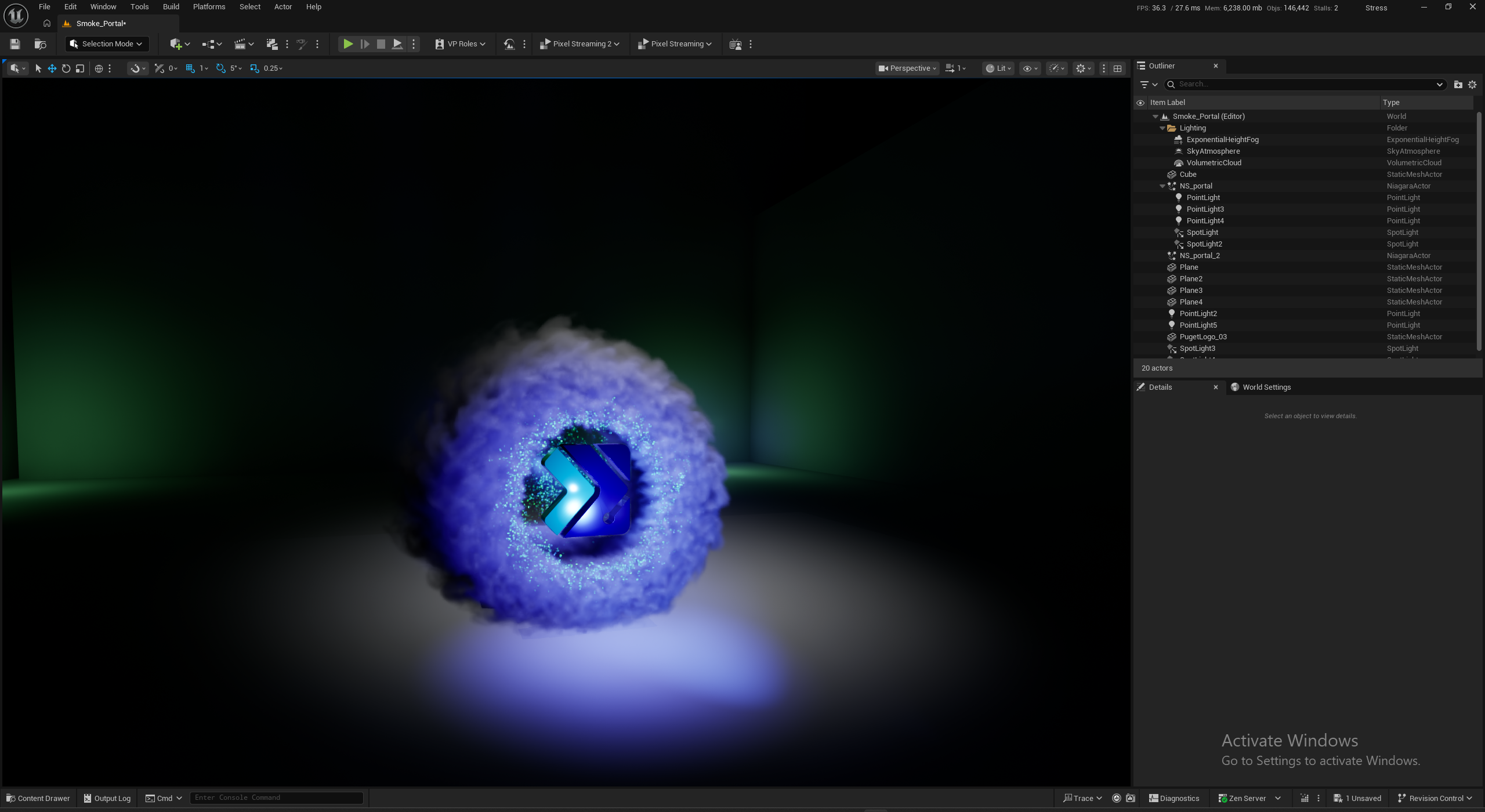
Some examples of various testing scenarios, including Niagara particles, physics, and smoke simulations.
Tests are a work in progress and subject to change.
Unlike many gaming-focused benchmarks, these workloads often stress both the CPU and GPU simultaneously. The result is a more representative view of how smoothly developers will be able to interact with projects while actively iterating on content.
Movie Render Performance
This benchmark will also evaluate cinematic rendering workflows using Unreal Engine’s Movie Render Queue (MRQ). These tests target offline rendering scenarios often used for trailers, cinematics, virtual production, and final output.
We include this test to capture performance in scenarios where Unreal is used beyond real-time interaction. While this workload leans heavily on the GPU, the CPU still plays a role in scene preparation and data management. Measuring MRQ performance helps evaluate how well a system handles the high-quality output workflows that are increasingly common in modern pipelines.
The MRQ may also end up being used as a way for this benchmark to more accurately measure performance for very specific aspects of Unreal Engine. Playing in editor viewports sometimes introduces additional variations (due to display resolution, refresh rate, etc.) that can be bypassed by rendering to a file at a fixed resolution.
Asset Processing
Importing and processing assets is another critical part of many Unreal Engine pipelines. Large textures, geometry caches, animations, and photogrammetry assets can place substantial demands on storage systems, CPU resources, and memory capacity.
Benchmark scenarios are planned to evaluate how efficiently systems handle these asset preparation workflows.
Lighting and Build Operations
Although modern real-time lighting technologies like Lumen are becoming increasingly common, traditional baked lighting workflows remain important in many industries and deployment targets.
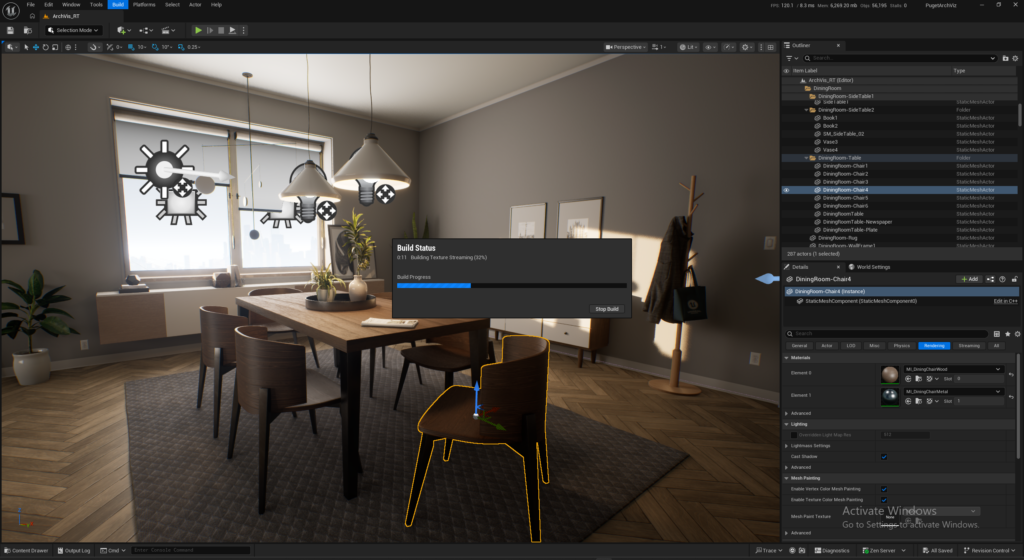
An example of light building. Test is a work in progress and subject to change.
Building lighting involves precomputing global illumination and generating lightmaps, which is a highly CPU-intensive process that can take significant time on large scenes. This test will reflect workflows where precomputed lighting is still a core part of development, and will highlight how well a system handles long-running, compute-heavy tasks that benefit from higher core counts and sufficient memory.
Nanite and Lumen Workloads
Nanite and Lumen have dramatically changed the hardware demands of Unreal Engine projects. These technologies enable significantly higher geometric complexity and more advanced real-time lighting, but they also introduce new performance considerations for both CPUs and GPUs.
We believe our benchmark’s approach to targeting these technologies will better represent modern Unreal Engine production environments, rather than relying solely on legacy rendering workflows.
Target Industries
Unreal Engine has evolved into a broad production platform used across far more than game development. Puget Bench for Unreal Engine is intended to support the growing range of industries relying on the engine for professional work, which include:
- Game development
- Virtual production
- Film and television
- Motion graphics
- Architecture and visualization
- Product visualization
- Automotive visualization
- Simulation and training
- Education
- Live events
Performance priorities can vary dramatically between these industries. A game developer building large interactive worlds may prioritize fast shader compilation and responsive viewport performance, while a virtual production studio may place greater emphasis on cinematic rendering and real-time playback stability.
Because of this diversity, our benchmark is being designed to evaluate multiple workflow categories to provide meaningful, actional information for the various types of users working in Unreal Engine.
Why Puget Systems Is Building This
Puget Systems has spent years developing workstation-focused benchmarks for professional applications used in content creation, engineering, post-production, and visualization workflows. The goal of Puget Bench for Unreal Engine is to bring that same philosophy to the growing Unreal Engine professional community.
What makes this approach different from many other benchmarks is the focus on real production workflows rather than purely synthetic testing. Our benchmark is intended not only to measure performance, but also to help educate users on how different hardware configurations impact specific Unreal Engine tasks.
In addition to the benchmark itself, our long-term vision includes ongoing benchmark maintenance, performance databases, comparison tools, and hardware guidance tailored specifically to Unreal Engine workflows. As Unreal Engine continues evolving across industries and production pipelines, Puget Bench for Unreal Engine will continue evolving alongside it.
Conclusion
We’re designing Puget Bench for Unreal Engine to provide a more practical and production-focused view of how Unreal Engine behaves across modern hardware platforms. Rather than reducing performance to a single synthetic metric, this benchmark will evaluate the workflows that developers, artists, and studios encounter throughout real projects.
And our work will not be done when we release the first version of this benchmark! Unreal Engine continues to expand into new industries and workflows, and the hardware demands of the engine grow accordingly. In tandem with these changes, we will keep refining Puget Bench for Unreal Engine to ensure it accurately reflects real-world workflows.
Ultimately, the goal is simple: provide reliable, repeatable, and meaningful performance data that helps Unreal Engine users build systems better suited for the work they do every day.

Looking for an Unreal Engine workstation?
We build computers tailor-made for your workflow.

Don’t know where to start?
We can help!
Get in touch with our technical consultants today.